
Wind Turbine Slip Ring for Wind Power Generator

Wind Power Generator
Wind Turbine Slip Ring
Power ring, 30A-200A
Signal ring, 24VDC/10A
Working speed, Max 80rpm
Operating temperature, -55℃~+250℃
Protection level, IP65
Features
• Signal transmission
• Good signal transmission compatibility
• Lightning arrester optional
• Encoder optional
Function of wind turbine slip ring
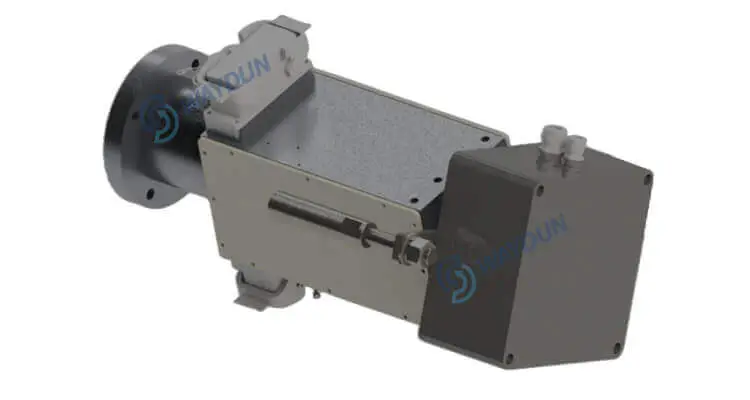
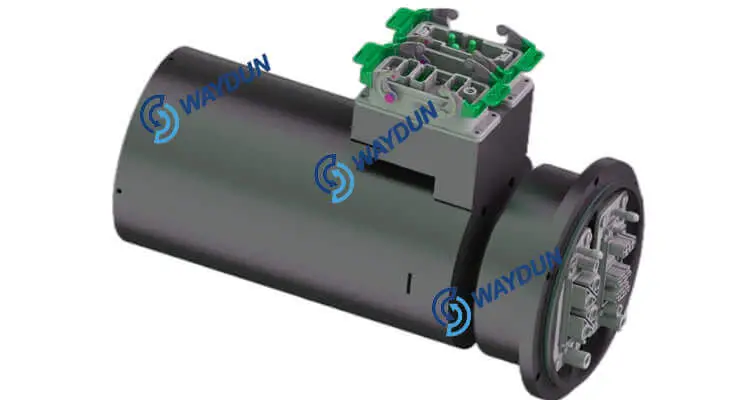
The wind turbine slip ring develop and design for megawatt-class wind power generation wind trubine system. It solves the winding problem caused by 360-degree infinite rotation of the wire during the transmission of power and pitch signal. Most wind power generator slip rings install at the tail of the gearbox.
Overall structure of wind power slip ring
The aluminum alloy material ensures the high rigidity and lightness of the overall structure of the slip ring. The integrated frame structure ensures rigidity and coaxial life reliability. Vibration resistance and life reliability of the slip ring.
Slipring brush wire
It uses precious metal alloy wire with low resistivity, large elastic modulus, small elastic hysteresis, good chemical stability and electrical corrosion resistance, good processing performance and ultra-high wear resistance.
Wind Turbine Slip Ring channels
Gold-plated alloy apply for high-end products, with good chemical stability and electrical corrosion resistance, low friction coefficient and low electrical noise. Silver-plated alloy apply for mid-end and low-end products, with low cost, low friction coefficient and low electrical noise.
Friction pair structure
Low friction coefficient, electrical noise, speed lubricant, long life, low contact pressure, low contact wear rate, high power circuit density, low dynamic contact resistance (noise), strong conduction capacity of high and low current, wide operating temperature range, wide rotation speed range, 5 years maintenance-free.
Slipring protection
The protection level of the variable pitch slip ring housing is IP65. The selected sealing material has high and low temperature stability and anti-aging characteristics. The operating temperature range is -55~+250℃, which can adapt to various harsh working conditions.
Corrosion resistance
The surface of the slip ring is anodized with aluminum alloy, and the corrosion resistance level reaches C4 requirements. The slip ring has passed the 720h test and verification. We can use it not only in various harsh environments on land, but also use at sea.
Signal transmission
Adopts multi-channel signal transmission structure and anti-interference design. The control signal cables are all special shielded cables matching the signals. We design shielding rings between power signals and control signals to protect the signals from interference.
Good signal transmission compatibility
It can transmit Profibus, CANbus, Ethernet, RS485, RS422 and other data. The signal transmission has been verified by the communication stability test of our CNAS laboratory, which can ensure the signal transmission rate is stable, without packet loss and bit error.
Rotor Blade CAN-Bus Communication Faults: Root Cause Analysis
Data packet loss and fieldbus drops are typical symptoms of degradation within the communication channels of a rotary signal union.
Target Diagnostic Codes: 3701, 3733, and 3765.
Failure Analysis: These errors usually stem from a locked pitch communication module, loose or poorly crimped wiring connections, or contaminated high-frequency slip ring tracks. If all three blade profiles trigger a CAN failure simultaneously, the problem is almost always poor contact across the central slip ring communication tracks.
The encoder integrated into the wind turbine slip ring assembly provides critical rotor speed feedback to the main PLC. Speed discrepancies can instantly compromise turbine safety controls.
Signal Loss (Code 4256: Rotor Speed Analogue Signal < 4mA)
Speed Plausibility Deviations (Codes 4266, 4267, 4268)
Residual Signaling (Codes 4276, 4277, 4278, 4279)