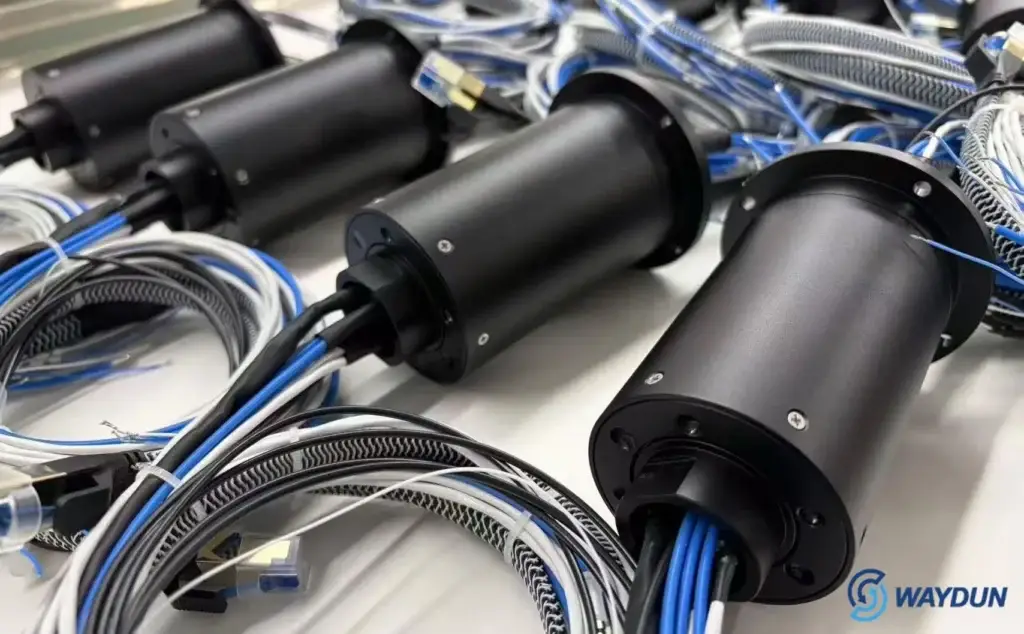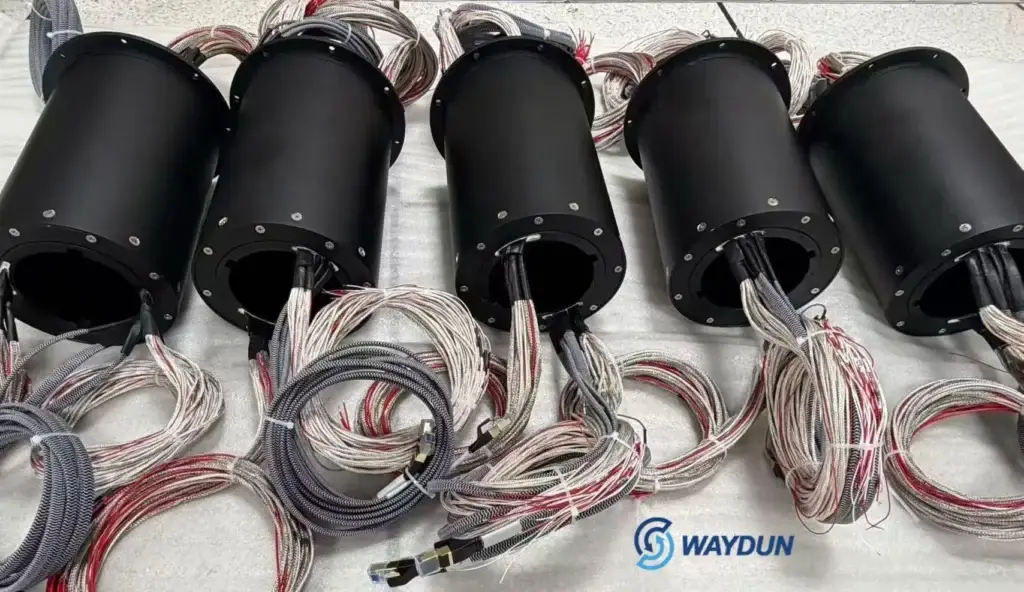
WayDun Technology typically organizes conductive slip ring testing qualification categories into four groups:
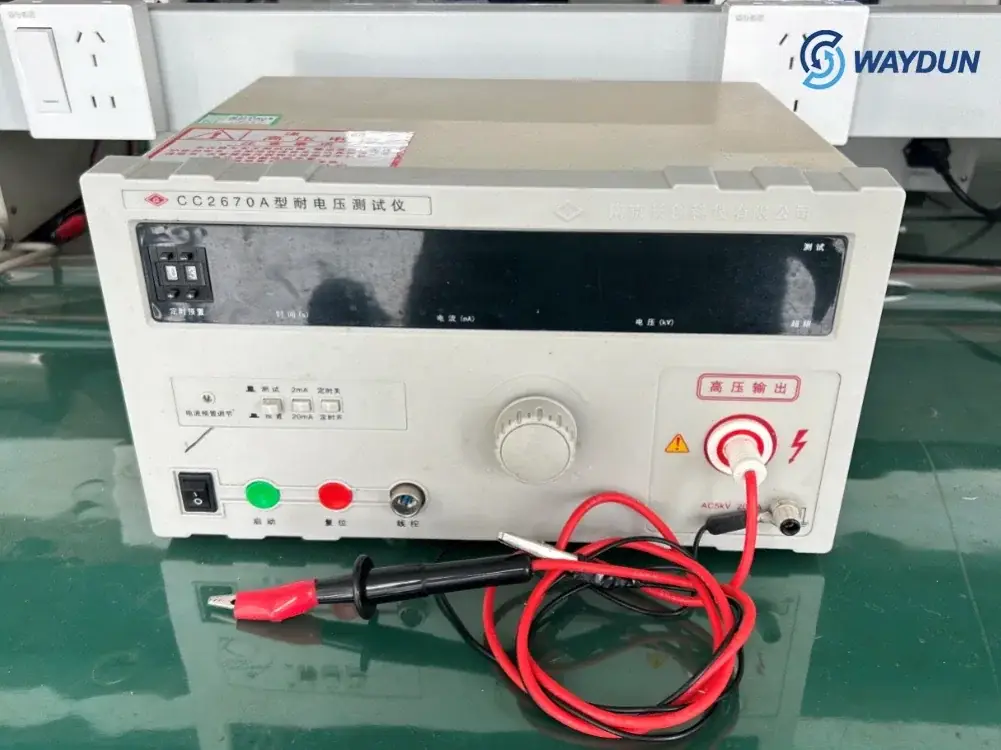
Group A: Electrical and Basic Performance Tests
Group A focuses on the fundamental electrical characteristics and manufacturing consistency of the conductive slip ring assembly.
The main test items include:
| Test No. | Test Item | Test No. | Test Item | Test No. | Test Item |
| A.1 | Visual inspection | A.2 | Structural dimensions | A.3 | Friction torque |
| A.4 | Contact resistance variation | A.5 | Insulation resistance | A.6 | Dielectric withstand voltage |
| A.7 | Temperature rise | A.8 | Short-term current carrying capability | A.9 | Bit error rate (BER) |
Group B: Mechanical Reliability Tests
Group B evaluates whether a slip ring can withstand mechanical stress during long-term operation.
| Test No. | Test Item | Test No. | Test Item | Test No. | Test Item |
| B.1 | Vibration test | B.2 | Shock test | B.3 | Mechanical life test |
These tests simulate real operating conditions where rotary connectors experience continuous movement, vibration and mechanical impact.
Group C: Environmental Reliability Testing
Group C verifies performance under extreme environmental conditions.
| Test No. | Test Item | Test No. | Test Item | Test No. | Test Item |
| C.1 | Low-temperature test | C.2 | High-temperature test | C.3 | Temperature cycling test |
| C.4 | Cyclic damp heat test | C.5 | Constant damp heat test |
Group D: Protection and Durability Testing
| Test No. | Test Item | Test No. | Test Item |
| D.1 | Salt spray corrosion test | D.2 | Protection rating test |
Among all qualification tests, contact resistance variation and bit error rate are the two most critical indicators. They directly reflect the long-term stability of electrical contact performance and signal transmission reliability.
Verifying Data Transmission Reliability in Rotary Electrical Connectors
Modern industrial equipment increasingly relies on slip rings not only for power transmission but also for high-speed data communication.
In applications such as robotic systems, automated inspection equipment, radar platforms, medical devices, and industrial rotary machinery, a slip ring must transfer digital signals accurately while the interface continues rotating.
For these applications, electrical continuity alone is not enough.
A high-performance signal slip ring must maintain stable impedance, minimize signal distortion, and achieve reliable data transmission throughout continuous operation.
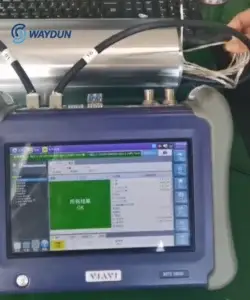
Bit Error Rate (BER) testing is one of the most important methods used to evaluate the communication reliability of a rotary electrical connector.
What Is Bit Error Rate (BER)?
In digital communication systems, an error occurs when the transmitted signal differs from the received signal.
For example, when a transmitter sends a digital signal of “1” but the receiver detects “0”, the system records one bit error.
Bit Error Rate represents the ratio between the number of incorrectly received bits and the total number of transmitted bits within a specific testing period.
The calculation is:
BER = Number of Bit Errors / Total Number of Transmitted Bits × 100%
BER is a critical indicator for measuring the accuracy and stability of data transmission.
For a signal slip ring used in industrial communication systems, a lower BER value indicates better signal integrity and higher transmission reliability.
Slip Ring BER Test Procedure
The BER test verifies whether an Ethernet slip ring can maintain accurate signal transmission during rotation.
The test procedure includes the following steps:
1. Test Equipment Setup
The slip ring is securely mounted on a dedicated testing platform.
The corresponding rotor-side circuits are connected by shorting each pair of ring output wires.
At the brush-side interface, the signal channels are connected separately to the CAN communication transmitter and receiver of a computer system.
This setup creates a complete communication loop through the slip ring.
2. Rotational Operating Test
During testing, the slip ring rotates at a speed of:
30 revolutions per minute (rpm)
The system continuously monitors data transmission performance while the rotary electrical connection is operating.
This simulates actual operating conditions where the slip ring must maintain stable electrical contact during continuous rotation.
3. Data Transmission Verification
The computer software generates random digital signal commands through the transmission terminal.
The receiving terminal captures the transmitted signals after they pass through the slip ring.
The system then compares the transmitted data with the received data bit by bit.
Any mismatch between the original signal and the received signal is recorded as a bit error.
The final BER value is calculated based on the percentage of incorrect data packets within the total transmitted data.
Signal Transmission Requirement: BER = 0
For high-reliability signal slip rings, data accuracy is a fundamental requirement.
During testing, the total transmitted data volume must exceed:
30 MB
The required signal transmission performance is:
BER = 0
This means no data errors are allowed during the defined testing period.
Achieving zero bit errors demonstrates that the slip ring maintains stable electrical contact, reliable signal integrity, and consistent communication performance under rotational conditions.
Why BER Testing Matters for Industrial Slip Ring Applications
Traditional conductive slip rings mainly focus on power transmission capability.
However, modern industrial systems require rotary connectors that combine:
- Power transmission
- Signal communication
- Data networking
- High-frequency transmission
- Real-time control feedback
A small fluctuation in electrical contact can introduce signal noise, packet loss, or communication failure.
For equipment manufacturers, BER testing provides direct evidence that a custom slip ring solution can support demanding applications requiring continuous and accurate data exchange.
Typical applications include:
Industrial Robots
Robot joints require compact signal slip rings to transmit encoder feedback, control signals, and power simultaneously.
Automated Inspection Equipment
Rotary inspection systems depend on stable data transmission between rotating sensors and stationary control units.
Radar and Tracking Systems
Precision rotary platforms require reliable electrical rotary interfaces to maintain uninterrupted communication.
Medical and Imaging Equipment
Medical rotary systems need high reliability and low signal interference to ensure accurate data acquisition.
Ensuring Long-Term Performance Under Real Operating Conditions
A conductive slip ring operates in environments where mechanical stress, temperature variation, humidity, and corrosion can directly affect electrical performance.
For industrial equipment manufacturers, a rotary electrical connector must deliver stable power and signal transmission throughout its service life—not only under laboratory conditions but also under continuous vibration, mechanical shock, and changing environmental conditions.
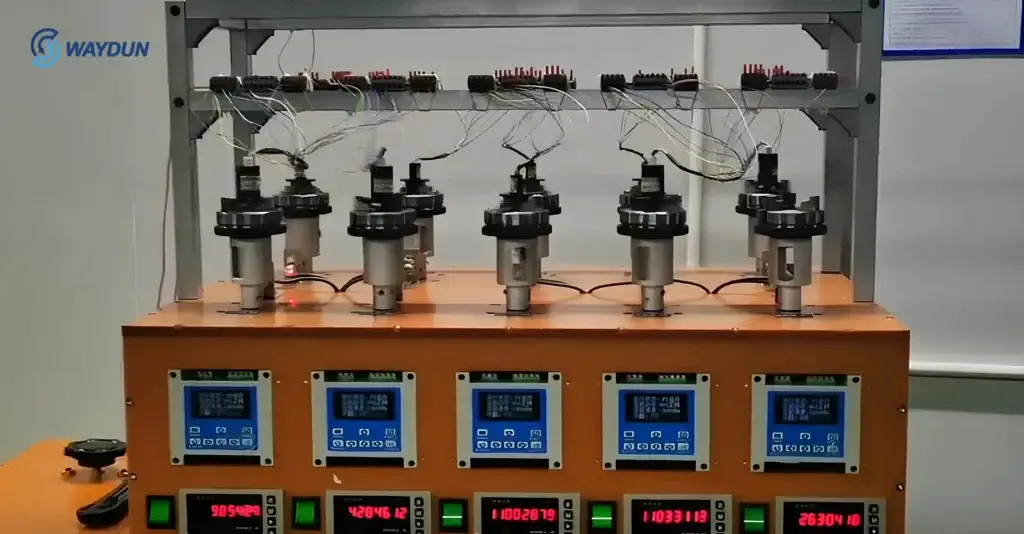
To verify long-term reliability, WayDun Technology performs mechanical and environmental qualification tests as part of its slip ring validation process.
These tests evaluate the durability of conductive slip rings, signal slip rings, and customized rotary electrical connectors used in demanding industrial applications.
Mechanical Reliability Tests for Slip Ring Assemblies
Mechanical reliability testing evaluates whether a slip ring can maintain structural integrity and electrical performance during continuous movement and external mechanical stress.
The mechanical test group includes:
- Vibration testing
- Shock testing
- Mechanical lifetime testing
Vibration Testing
Industrial equipment often generates continuous vibration during operation.
Applications such as robotic systems, automated production equipment, heavy machinery, and rotating platforms require slip rings that can maintain stable electrical contact despite mechanical vibration.
The vibration test evaluates whether the slip ring assembly can withstand external vibration forces without:
- Structural damage
- Electrical interruption
- Performance degradation
A reliable slip ring design must maintain stable contact between brushes and conductive tracks throughout the vibration testing process.
Shock Testing
Shock loads can occur during transportation, equipment startup, emergency stops, or sudden mechanical impacts.
The shock test verifies the ability of the rotary electrical connector to withstand sudden mechanical forces while maintaining normal operating performance.
This test helps identify potential weaknesses in:
- Mechanical structure
- Internal components
- Brush contact stability
- Circuit connections
For OEM equipment manufacturers, shock resistance is especially important when slip rings are installed in mobile equipment, outdoor machinery and industrial systems exposed to unpredictable mechanical loads.
Mechanical Lifetime Testing
A slip ring is designed for continuous rotation over an extended operating period.
Mechanical lifetime testing evaluates whether the slip ring can maintain its designed performance after repeated rotational cycles.
The test focuses on long-term durability, including:
- Rotational stability
- Mechanical wear resistance
- Contact reliability
- Structural consistency
For custom slip ring applications, mechanical lifetime verification helps manufacturers predict service performance and reduce unexpected maintenance requirements.
Environmental Reliability Testing for Slip Rings
Industrial rotary connectors may operate under extreme temperature changes, humidity, and corrosive environments.
Environmental testing verifies whether a slip ring can maintain electrical and mechanical performance under different operating conditions.
The environmental test group includes:
- Low-temperature testing
- High-temperature testing
- Temperature shock testing
- Cyclic damp heat testing
- Constant damp heat testing
Low-Temperature Testing
Low-temperature testing evaluates slip ring performance in cold operating environments.
Temperature reduction can influence:
- Material properties
- Lubrication performance
- Contact stability
- Mechanical movement
The test verifies that the slip ring maintains reliable electrical connection and mechanical operation under low-temperature conditions.
High-Temperature Testing
High-temperature environments can accelerate material aging and affect electrical contact performance.
High-temperature testing evaluates whether the slip ring assembly can maintain:
- Stable electrical transmission
- Mechanical reliability
- Continuous operating capability
This verification is important for industrial applications exposed to heat sources, outdoor conditions, or high-temperature equipment environments.
Temperature Shock Testing
Industrial equipment may experience rapid temperature changes during operation, transportation, or environmental exposure.
Temperature shock testing evaluates the structural and electrical stability of a slip ring when exposed to sudden temperature variations.
The test helps verify resistance against potential issues caused by thermal expansion and contraction.
Humidity Reliability Testing
Corrosion Resistance and Protection Testing
For outdoor and industrial applications, protection against moisture, dust, and corrosion is essential.
The final qualification tests include:
- Salt spray corrosion testing
- Protection level testing
Salt Spray Corrosion Testing
Salt spray testing evaluates corrosion resistance when slip rings are exposed to corrosive environments.
This test is especially relevant for applications such as:
- Marine equipment
- Coastal machinery
- Outdoor automation systems
- Industrial equipment exposed to harsh environments
A corrosion-resistant slip ring design helps maintain electrical reliability and extends operational lifetime.
Reliability Validation Before Industrial Deployment
A professional slip ring manufacturer Hangzhou WayDun Technonoly will evaluate products from multiple perspectives:
- Electrical stability
- Signal transmission accuracy
- Mechanical durability
- Environmental resistance
- Long-term operating reliability
Comprehensive qualification testing allows OEM customers to select rotary electrical connectors with greater confidence for critical applications.
For industrial automation, robotics, and precision equipment, reliability testing is not simply a quality inspection step—it is the foundation for stable system operation.