
Electrical Slip Ring in Packaging and Filling Lines: A Complete Guide
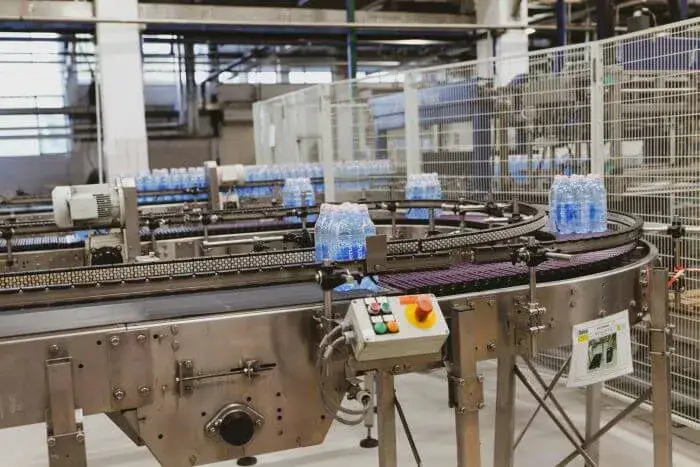
Packaging Line
Φ 50mm, 12*20A
Φ 38mm, 6*20A, 10*signals
Features
• Standard Types
• Can combine with gas
• Customizable for overall dimension
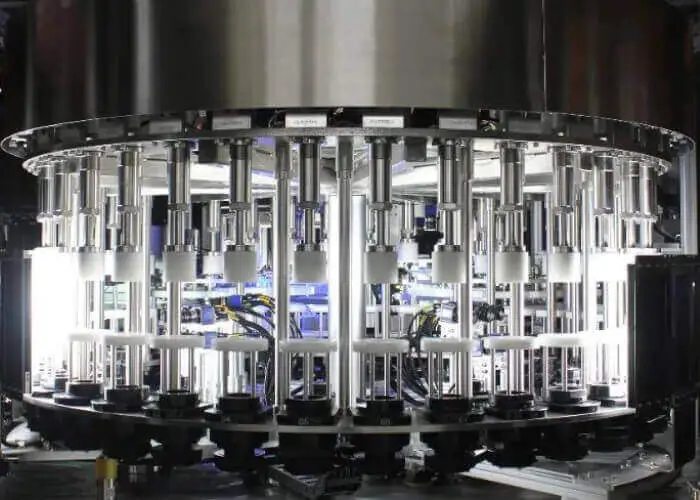
Filling Machine
Φ 25.4mm, OD 78mm, 6*10A
Φ 38.1mm, OD 99mm, 12*10A+4*CANbus
Φ 50mm, OD 120mm, 10*signals, IP67
OD 120mm, 5*100A+6*5A+2*Ethernet+1 Mpa Compressed air
Features
• Standard product, high reliability
• Can integrate optical and pneumatic rotary joint
• Can select Siemens cable wires
On automated packaging and filling lines, keeping machinery running smoothly is everything. If electrical power or signal connections fail at a spinning joint, the entire production line stops. This makes stable power and data transmission a critical lifeline for modern factory floors. To prevent costly downtime, operations need a reliable, rugged rotary conduction solution built for harsh environments. This is where specialized electrical slip rings come into play.
Table of Contents
Toggle1. How Slip Rings Keep Automation Moving
Automated production lines rely heavily on continuous 360-degree rotation to process products quickly. Standard fixed wiring cannot handle this movement; cables quickly twist, wear out, and snap.
An electrical slip ring solves this issue. It acts as a rotating electrical interface. The stator (the stationary brush part) maintains a constant electrical connection with the rotor (the spinning ring part). This design allows the machine to pass clean power, control data, and fluid media across a spinning gap without tangling cables.
2. Slip Ring Roles Across Different Production Stages
An automated packaging line consists of several specialized zones. Each stage exposes internal components to distinct electrical loads and environmental hazards.
Blow Molding Stage
Before filling can begin, machines often shape the containers on-site. Rotary blow molding equipment requires heavy electrical currents and high-pressure compressed air. Specialized slip rings route power directly to the preform heating elements. At the same time, they pass critical control data to manage clamping and air-blowing tasks.
Rinsing and Inspection Stage
Next, containers enter the washing and inspection zones. Here, slip rings supply power, control signals, and liquids to individual cleaning components. They also transmit high-speed Ethernet data. This allows automated cameras to inspect bottles for defects in real time without communication lag.
The Filling Process
The filling carousel handles massive data flows. Modern high-efficiency plants need real-time data tracking across the entire transmission link. Ethernet slip ring deliver stable, interference-free signal transmission and reliable Ethernet communication. They also keep the rotating platform powered up. This ensures that flow meters and filling valves communicate perfectly to prevent overfills or product waste.
The Capping Stage
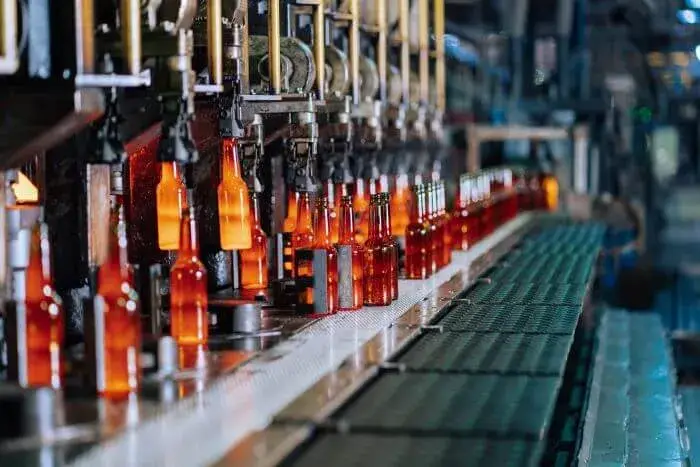
After filling, bottles move quickly to the capping machine. Slip rings supply power to the capping drives while routing control signals and data. This keeps torque application exact, preventing damaged caps or loose seals.
Packaging and Labeling
Finally, the labeling unit applies branding. Slip rings transfer drive currents and precise control data directly to the labeling actuators. This keeps labels perfectly aligned even during high-speed runs.
3. Industrial Challenges and Tech Requirements
Packaging environments are demanding. Equipment faces distinct physical stresses depending on the product being processed.
Washdown and Dust Protection: Packaging spaces can be dusty or highly humid. For example, beverage filling lines face frequent chemical washdowns and heavy moisture. Hardware must handle these conditions. A proper slip ring needs an IP65 protection rating to seal out fine dust and liquid splashes safely.
High-Speed Data Performance: Modern plants rely heavily on Industrial Ethernet for the Industrial Internet of Things (IIoT). Slip rings must pass this fast data without dropping packets. They require advanced shielding and gold-on-gold contact technology to keep electrical noise extremely low. This guarantees that PLC communication and vision systems remain perfectly stable.
4. Technical Analysis of a Proven Solution
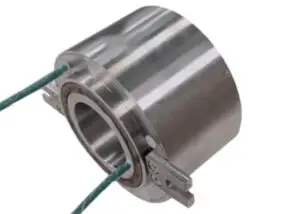
Let us look at a concrete engineering example: the WAYDUN DMT050-0820-08S through-bore slip ring. This component demonstrates how modern hardware addresses tough application environments.
Mechanical Footprint
The unit features a compact body with a 50mm central through-hole. This over-hole lets engineers run drive shafts or liquid and pneumatic pipes right through the center, saving valuable internal machine space. It also comes with 1 meter cables pre-installed at both ends to simplify field wiring.
Electrical and Operational Specs
Rotational Speed: Operating speeds range from 0 to 600 RPM, keeping performance steady during fast cycles.
Power and Signals: It can be configured with 8 paths of 20A power along with 8 signal channels. For multi-motor setups, it supports 10A per circuit at 480V AC.
Thermal Capabilities: The unit runs reliably in temperatures from -20°C to 60°C, handling seasonal plant changes easily.
Contact Material Quality
The unit uses premium precious metal contacts. This gold-on-gold design keeps the dynamic contact resistance fluctuation incredibly low≤ 10 mΩ. Low resistance means less heat, lower power loss and zero signal cross-talk. It ensures encoder signals remain stable without missing data packets or dropped links. Custom slip ring design options are also available to meet specialized machine layouts.
5. Summary
Choosing a rugged electrical slip ring directly affects your overall operational efficiency. From beverage and sterile pharmaceutical filling to daily chemical pastes and cold-chain foods, these integrated units protect your machinery from failures. They cut downtime, boost plant efficiency, and keep your production goals entirely on track.
Are you facing signal dropouts, data packet loss, or space constraints on your high-speed rotating machinery? Don’t let an unreliable connector threaten your daily throughput. Contact our application engineering team today!