
Introduction: Why the Manufacturer You Choose Matters
Every industrial system that requires continuous rotation faces a fundamental engineering challenge: how do you reliably transmit electrical power, control signals, fluids, or gases across the interface between a stationary structure and a rotating component? The answer lies in two complementary rotary transmission technologies — slip ring assemblies and rotary unions — and in selecting a manufacturer with the engineering depth to deliver a solution built around your specific requirements.
Whether you are a procurement engineer sourcing slip ring assemblies for a packaging line, a design engineer specifying a rotary union for a high-pressure hydraulic system, or an OEM platform manager evaluating rotary joint manufacturers for next-generation robotics, this guide is written for you. It covers the technology fundamentals, global supplier landscape, selection criteria, and the growing importance of custom engineering — giving you a structured framework to make a confident, cost-justified decision.
Article for Help Engineers to Know Slip Ring Well
The global market for rotary transmission components is expanding rapidly. Automation, wind energy, medical imaging, semiconductor manufacturing, and defense modernization are all driving demand for higher-performance, application-specific slip ring and rotary union solutions. At the same time, the vendor landscape has never been more complex, ranging from precision European manufacturers with decades of specialized heritage to fast-moving Asian OEM producers offering competitive pricing and rapid delivery. Knowing how to navigate that landscape is the first step toward procurement success.
Table of Contents
ToggleGlobal Manufacturer Landscape: Who Makes Slip Rings and Rotary Unions?
The global supply base for slip ring assemblies and rotary unions is divided broadly into three tiers: precision Western manufacturers with deep engineering heritage, specialized mid-market suppliers with strong application focus, and cost-competitive OEM producers — primarily in Asia — offering rapid delivery and flexible customization.
Leading Slip Ring Assembly Manufacturers
Moog Inc. (USA) is widely regarded as the benchmark supplier for mission-critical slip ring assemblies in aerospace, defense radar, and UAV platforms, with a reputation built on extreme reliability in harsh environments. Schleifring GmbH (Germany) dominates the medical imaging segment, particularly CT scanners and MRI systems, where ultra-low contact noise and long operational life are non-negotiable. Mersen (France) brings strong expertise in industrial power slip rings for energy generation and heavy industry. STEMMANN-TECHNIK (Germany) is a leading rotary transmission manufacturer for wind turbines and offshore platforms. Conductix-Wampfler (Germany/Global) provides integrated system solutions combining energy, data, and cable management for automation and material handling. Michigan Scientific (USA) specializes in precision measurement slip rings for automotive testing and R&D applications.
In parallel, Chinese slip ring manufacturers have significantly expanded their global market share, offering competitive pricing, faster lead times, and improving engineering capability — particularly for surveillance systems, industrial robotics, wind energy applications, and cost-sensitive OEM programs.
Manufacturer | Country | Market Position | Core Strengths | Key Applications |
USA | Aerospace & defense leader | Extreme reliability, custom engineering, harsh environment design | Radar, UAV, defense platforms | |
Germany | Precision medical leader | Ultra-low noise, high signal integrity, long-life design | CT, MRI, medical robotics | |
Mersen | France | Industrial power systems | Robust electrical design, energy sector expertise | Energy, heavy industry |
STEMMANN-TECHNIK | Germany | Offshore & industrial systems | High durability, wind & marine focus | Wind turbines, offshore systems |
Conductix-Wampfler | Germany/Global | System integration provider | Energy + data + cable systems integration | Automation, cranes |
Michigan Scientific | USA | Testing & instrumentation | High precision measurement slip rings | Automotive testing, R&D |
Moog Components Group | USA | Motion control systems | Integrated rotary + motion systems | Robotics, defense systems |
China | Cost-competitive & fast customization | Rapid delivery, improving high-speed capability | Robotics, surveillance, wind energy |
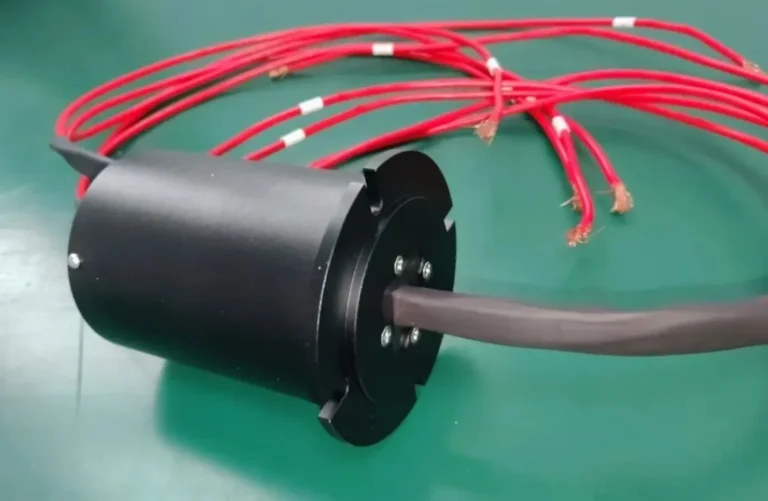
Leading Rotary Union Manufacturers
Deublin Company (USA) is the dominant global supplier of rotary unions across a broad range of industrial applications, recognized for its comprehensive product portfolio and sealing technology leadership. Kadant Inc. (USA) commands strong positions in paper machines and steel mills, where durability under heavy-duty cycling is paramount. DSTI (USA) serves high-performance applications in defense and robotics with aerospace-grade sealing systems rated for high pressure and high speed. Johnson Fluiten (Italy) offers compact, precision rotary joints for machine tools and packaging machinery. ROTOFLUX (Europe) occupies the standard industrial segment with a balanced performance-to-cost offering. EWELLIX (part of SKF Group, Sweden) integrates rotary unions into broader motion system architectures for automation platforms.
Asian OEM rotary union producers have become increasingly competitive in CNC machining, packaging automation, and general manufacturing segments, particularly where standard configurations and price sensitivity drive procurement decisions.
Manufacturer | Country | Market Position | Core Strengths | Key Applications |
Deublin Company | USA | Global leader | Broad product range, sealing technology excellence | Industrial machinery, automation |
Kadant Inc. | USA | Heavy industry specialist | High durability, paper & steel industry dominance | Paper machines, steel mills |
DSTI | USA | High-performance engineering | High pressure, high speed, aerospace-grade sealing | Defense, robotics |
Johnson Fluiten | Italy | Precision engineering | Compact, high-efficiency sealing design | Machine tools, packaging |
ROTOFLUX | Europe | Industrial standard supplier | Balanced performance and cost | General manufacturing |
EWELLIX (SKF Group) | Sweden | Motion system integration | Bearing + motion system expertise | Automation systems |
China | Fast-growing industrial supplier | Cost advantage, customization capability | CNC, automation, packaging |
How to Select the Right Manufacturer: A Four-Step Framework
Step 1 — Define Your Application Criticality
Not every application demands a Tier 1 aerospace-grade supplier, and not every budget justifies one. The first step is to honestly assess the consequence of failure in your system. Use the matrix below as a starting point:
Application Level | Typical Use Case | Recommended Tier |
Mission Critical | Aerospace, defense, medical imaging | Moog / Schleifring / DSTI |
Industrial High Duty | Wind energy, heavy automation | Deublin / Mersen / STEMMANN |
Standard Industrial | Packaging, general machinery | ROTOFLUX / Conductix / OEM |
Cost Sensitive | Surveillance, volume OEM systems | Asian OEM manufacturers |
Step 2 — Specify Transmission Requirements Precisely
The most common source of poor supplier fit is an under-defined specification. Before approaching any slip ring assembly manufacturer or rotary union manufacturer, document your requirements in full: electrical circuits or fluid passages required, media type and chemical properties, pressure, temperature, and speed ranges, required service life in hours or cycles, installation envelope (diameter, length, bore size), environmental conditions (IP rating, ATEX zone, temperature extremes), and any applicable certifications (ISO, CE, UL, RoHS, MIL-SPEC).
For hybrid systems requiring both electrical transmission and fluid passage, specify whether these functions can be handled by separate co-located units or whether an integrated electro-fluidic rotary assembly is required. Integrated designs reduce installation complexity and potential leak points but require a supplier with competency across both disciplines.
Step 3 — Apply a Total Cost of Ownership (TCO) Model
Purchase price is rarely the most important cost variable for rotary transmission components. A low-cost slip ring or rotary joint that fails prematurely in a production environment generates downtime, maintenance labor, replacement parts, and potentially scrapped product — costs that can dwarf the initial purchase price difference many times over. A robust TCO model should include: acquisition cost, installation cost, planned maintenance intervals and consumable costs (brush replacements, seal kits), mean time between failures (MTBF) and associated downtime cost, warranty terms and post-warranty support cost, and end-of-life replacement logistics.
For mission-critical applications, request MTBF data and life-test certificates from your prospective supplier. For standard industrial applications, ask for documented field performance data from comparable installations.
Step 4 — Assess Manufacturer Capabilities Directly
Technical specifications tell only part of the story. Evaluate potential suppliers against the criteria in the table below:
Evaluation Criterion | What to Assess |
Engineering Customization | In-house design team, CAD capability, prototype lead times |
Material & Sealing Technology | Seal grades, brush alloys, housing materials for your media |
Certification Compliance | ISO 9001, CE, ATEX, UL, RoHS as applicable |
Testing Infrastructure | Life-cycle testing, leak testing, EMI/signal integrity testing |
Production Scalability | Capacity for prototype through high-volume production |
Global Support Network | Regional service centers, spare-part availability, remote diagnostics |
Request factory audits or virtual tours for mission-critical programs. Ask to speak with the application engineers who will be assigned to your project, not just the sales team. The quality of the engineering conversation you have before an order is placed is the single best predictor of the partnership quality after it.
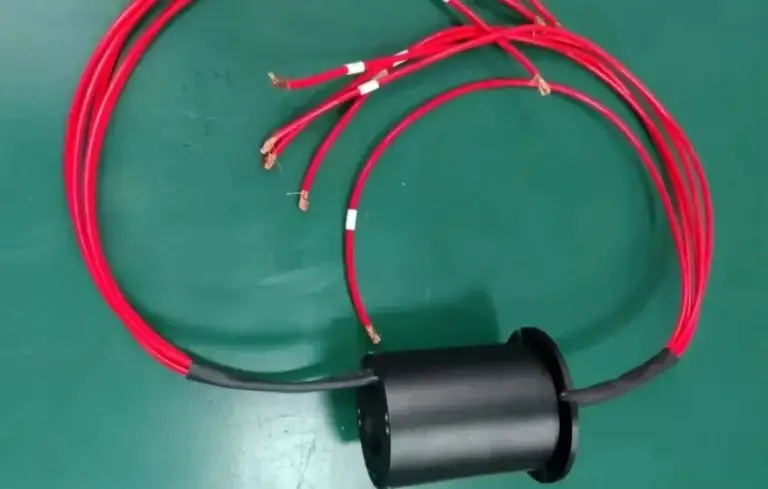
The Rising Importance of Custom Engineering in Rotary Transmission
A decade ago, the dominant procurement model was catalog selection: find the standard slip ring or rotary union closest to your specification and adapt the design around it. Today, the model is shifting. As equipment becomes more sophisticated, installation envelopes tighter, performance demands higher, and operating environments more extreme, buyers increasingly need manufacturing partners capable of true custom engineering — not just off-the-shelf product selection.
Custom slip ring assemblies are now routinely specified for applications such as: multi-axis industrial robots requiring 100+ channel high-speed data rings in a sub-50mm bore; wind turbine pitch control systems combining power circuits, CAN-bus signals, and Ethernet in a single unit rated for 20-year outdoor service; medical imaging platforms requiring sub-milliohm contact resistance with zero electrical noise interference on sensitive diagnostic signals; and semiconductor wafer handling systems demanding clean-room-compatible materials with particulate generation below threshold limits.
Custom rotary union development is equally active in: aerospace test rigs requiring multi-passage high-pressure water cooling at cryogenic temperatures; CNC machining centers integrating coolant, air purge, and tool detection signals in a single through-spindle assembly; food and beverage processing equipment demanding FDA-approved seal materials with CIP (clean-in-place) compatibility; and subsea equipment requiring materials rated for full seawater immersion at depth.
When evaluating a custom slip ring assembly manufacturer or custom rotary union manufacturer, look specifically for: a dedicated applications engineering team (not just product sales), documented custom project experience in your sector, in-house prototype and test capability, design-for-manufacturability (DFM) review processes, and a clear IP protection policy for customer-specific designs.
4. Industry Verticals and Application-Specific Considerations
Wind turbine rotary transmission systems — specifically the main shaft slip ring for pitch control and the rotary union for blade cooling circuits — operate in remote, harsh environments with virtually no tolerance for unplanned maintenance. Manufacturers must demonstrate extended MTBF, corrosion-resistant materials, and an established service network. STEMMANN-TECHNIK, Mersen, and specialized Chinese OEMs with documented wind sector experience are typical candidates.
CT scanner and MRI system manufacturers represent the most demanding slip ring application in terms of signal integrity. The brush contact system must deliver noise levels below 10 milliohms across high-frequency signals while running continuously for years. Schleifring GmbH has built its global reputation almost entirely on this application domain. Any alternative supplier must provide documented EMC test data and reference installations with major imaging OEMs.
Robotic arms, automated guided vehicles, rotary indexing tables, and collaborative robots all require compact, lightweight slip ring and rotary union assemblies with high circuit density. The trend toward Ethernet-based industrial protocols (EtherCAT, PROFINET) is driving demand for fiber optic rotary joints and high-frequency signal slip rings in automation platforms. Suppliers with both mechanical and electronic integration competency are preferred. WayDun Technology Co., Ltd. provide custom solutions.
Semiconductor and Electronics Manufacturing
Wafer handling equipment and photolithography systems require particulate-free, vacuum-compatible rotary transmission components manufactured under cleanroom conditions. This is a specialized niche with a small but highly qualified global supplier base. Buyers should verify cleanroom manufacturing certification and request particle generation test reports.
Radar antenna pedestals, electro-optical targeting systems, satellite communication platforms, and UAV payloads require slip ring assemblies engineered to MIL-SPEC standards with vibration ratings to MIL-STD-810 and environmental sealing to IP67 or above. Moog Inc. and Moog Components Group remain the benchmark suppliers in this segment, though DSTI and several European precision manufacturers also hold strong positions.
Frequently Asked Questions from Procurement Engineers
What is the typical lead time for a custom slip ring assembly?
Lead times for custom-engineered slip ring assemblies range from 4 to 16 weeks depending on complexity, volume, and the manufacturer’s current production loading. Simple modifications to catalog designs (different connector types, IP rating upgrades, additional circuits within an existing frame size) are typically 4 to 8 weeks. Fully bespoke designs requiring new tooling and qualification testing can take 12 to 20 weeks.
When does a standard product suffice versus a custom solution?
Standard catalog products are appropriate when your application parameters — bore size, speed, pressure, temperature, media, and circuit count — fall within the published specification range and when the installation envelope can accommodate a standard form factor without modification. Custom solutions become necessary when any critical parameter falls outside catalog limits, when the installation requires a non-standard form factor, when multiple functions (electrical and fluid) must be integrated, when a specific certification not available on standard products is required, or when service life requirements exceed catalog ratings.
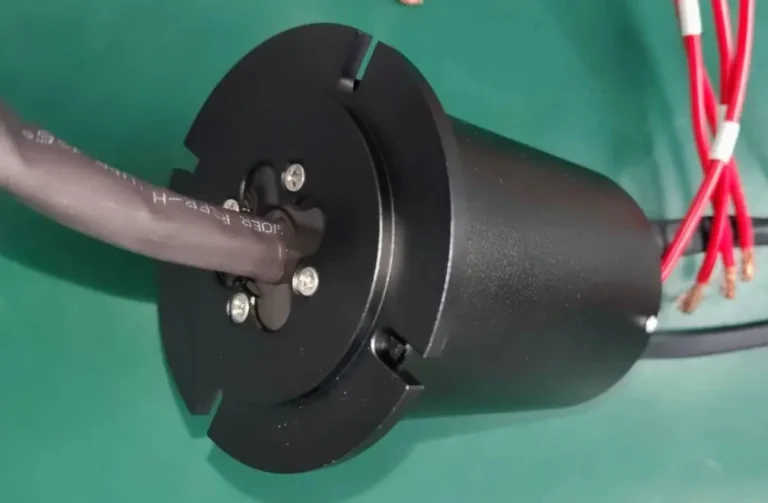
Conclusion: Finding the Right Manufacturing Partner
The global slip ring assembly manufacturer and rotary union manufacturer landscape offers industrial buyers a wide spectrum of choices — from world-class precision engineering companies with decades of application-specific expertise to nimble OEM producers capable of fast-turnaround custom work at competitive prices. No single tier is universally superior; the right choice depends entirely on your application requirements, risk tolerance, budget, and long-term supply chain strategy.
What is consistent across all successful procurement decisions in this space is the quality of the engineering relationship. The most valuable manufacturing partners are those who invest time in understanding your application before proposing a solution, who can demonstrate relevant experience rather than simply catalog depth, who are transparent about the limits of their standard products and proactive in proposing custom alternatives when required, and who remain accessible and technically engaged throughout the product lifecycle.
The right slip ring assembly manufacturer or rotary union manufacturer WayDun Technology is not necessarily the biggest, the cheapest, or the most well-known. It is the one whose engineering capability, manufacturing quality, customization flexibility, and customer-service culture align most closely with the demands of your specific application.