
For engineers selecting an electrical slip ring, good products is not determined by a single specification. Contact stability, insulation capability, signal integrity and electromagnetic compatibility all directly affect the service life and performance of a rotary electrical connection system.
Key Takeaways
- Dynamic contact resistance directly affects electrical signal stability.
- Insulation materials determine circuit isolation and long-term reliability.
- Electromagnetic interference shielding is crucial for mixed power and signal transmission.
- Custom-designed slip rings should be tailored to specific operating conditions.
Table of Contents
Toggle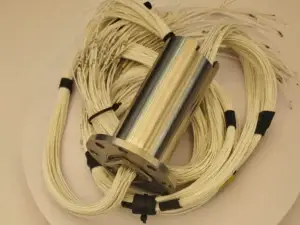
Dynamic Resistance and Its Impact on Slip Ring Performance
Dynamic resistance refers to the change in contact resistance between the brushes and the rings during rotation.
Inside the slip ring assembly, the rotor and stator form a conductive path through the contact interface between the brushes and the rings. During operation, engineers can use a micro-ohmmeter or micro-voltmeter to measure the resistance fluctuation range of this path.
Stable electrical contact produces smaller dynamic resistance variations, thereby improving signal transmission accuracy and reducing electrical noise.
For precision applications such as industrial control equipment, data acquisition systems and automated sensors, unstable contact resistance can lead to signal distortion, intermittent transmission or communication errors.
Causes of Dynamic Resistance Fluctuations
Dynamic resistance variations are unavoidable because the contact surface between brushes and conductive rings cannot be perfectly smooth at the microscopic level.
Many factors influence dynamic resistance:
- Selection of insulation material
- Quality of the surface plating of the conductive ring
- Contact pressure between the brush and the ring
- Foreign matter on the contact surface
- Poor electrical contact
- Manufacturing precision of the slip ring structure
Since surface treatment cannot achieve a perfectly ideal contact interface, every slip ring exhibits a certain degree of resistance fluctuation.
In general applications, dynamic resistance fluctuation is typically controlled below 10 milliohms, while high-performance designs can achieve levels approaching 1 milliohm.
Manufacturing Technology for Low Contact Resistance Slip Rings
Reducing dynamic resistance requires controlling materials, surface treatment and mechanical precision.
High-quality slip ring manufacturers WayDun Technology typically use advanced contact technologies, including gold-to-gold contact structures and precision mirror finishing.
Gold-to-gold contact technology is widely used in precision electrical slip rings because gold provides stable electrical conductivity and excellent resistance to oxidation. Combined with precision machining and controlled contact pressure, this structure helps reduce contact resistance fluctuation during long-term rotation.
For example, advanced mirror finishing technology can reduce contact surface roughness to below Ra 0.02, thereby helping to maintain stable electrical performance during continuous rotation, extending service life and improving reliability. These customized manufacturing methods are particularly important for slip ring connectors used in harsh environments with extremely high requirements for signal accuracy and long-term operation.
Insulation Performance of Electrical Slip Rings: Material Selection and Structural Design
Insulation performance is a critical factor in the reliability of an electrical slip ring. A rotary electrical connector typically contains multiple conductive circuits, while each circuit must remain electrically isolated from adjacent channels to prevent signal interference, leakage current and electrical failure.
For industrial equipment that requires simultaneous transmission of power, control signals, data, and high-frequency signals, insulation reliability directly affects system stability.
A high-quality electrical slip ring design must ensure sufficient insulation performance between conductive rings while maintaining compact mechanical dimensions and long-term operational reliability.
Key Factors Affecting Electrical Slip Ring Insulation Performance
The insulation capability of a conductive slip ring depends on two major factors:
- Internal insulation performance
- External insulation performance
Both factors must be considered during the design and manufacturing process.
Internal Insulation: Material Properties and Structural Reliability
Internal insulation refers to the insulation capability provided by the materials and structures inside the electrical slip ring assembly. The insulation design must maintain sufficient electrical separation between conductive circuits while preventing leakage current and signal interference.
The insulation coordination design we can refer to principles described in IEC 60664-1, including considerations related to c surface contamination learance distance, creepage distance, solid insulation, and electrical testing requirements.
The insulation materials separate individual conductive circuits and prevent electrical interference between adjacent channels.
The performance of internal insulation depends mainly on:
- Material characteristics
- Material purity
- Aging resistance
- Moisture absorption
- Mechanical strength
- Processing performance
- Dielectric strength
Selecting the correct insulation material is essential because the material must withstand electrical stress, mechanical vibration, temperature changes, and long-term operation.
For electrical slip ring manufacturers, insulation materials must provide not only high electrical resistance but also sufficient mechanical stability during continuous rotation.
External Insulation: Environmental Protection and Application Conditions
External insulation refers to the insulation performance affected by the operating environment outside the slip ring.
Unlike internal insulation, which mainly depends on material selection and structural design.
External insulation performance depends on operating conditions including contamination, humidity, temperature, dust exposure, and moisture ingress. For outdoor equipment and harsh industrial environments, enclosure protection design becomes a critical factor affecting electrical slip ring reliability.
Protection levels for sealed electrical rotary connectors are commonly evaluated according to IEC 60529 IP classification requirements, such as IP65 or IP67 protection levels for dust and water resistance applications.
Because electrical slip rings operate in different environments, manufacturers must consider the actual application conditions before defining the protection design.
For example, a slip ring used in indoor automation equipment may require different protection compared with a rotary electrical connector installed in outdoor machinery, marine equipment or high-humidity industrial environments.
Selecting Insulation Materials for High Reliability Slip Rings
The insulation structure inside an electrical rotary connector commonly uses high-performance engineering plastics or epoxy-based insulating compounds.
Different slip ring structures require different insulation solutions.
For example:
- Insulating sheets are commonly used in larger slip ring designs, including through-hole slip rings and large customized rotary electrical connectors.
- Epoxy resin-based filling processes are often applied to smaller slip rings and compact customized slip ring assemblies.
The choice of insulation method depends on the product size, circuit configuration, operating environment, and required electrical performance.
A well-designed insulation system must balance electrical isolation, mechanical strength, thermal stability, and manufacturing accuracy.
Protection Design for Customized Electrical Slip Rings
A customized electrical slip ring should be designed according to the customer’s operating environment rather than using a standard configuration for every application.
Environmental protection requirements may influence:
- Housing structure
- Sealing method
- Insulation material selection
- Protection level
- Internal circuit layout
The insulation design must match the application scenario.
A reliable slip ring manufacturer evaluates both electrical requirements and environmental conditions during the design stage to maintain stable insulation performance throughout the product lifecycle.
Electromagnetic Interference Protection in Electrical Slip Rings: Ensuring Stable Signal Transmission
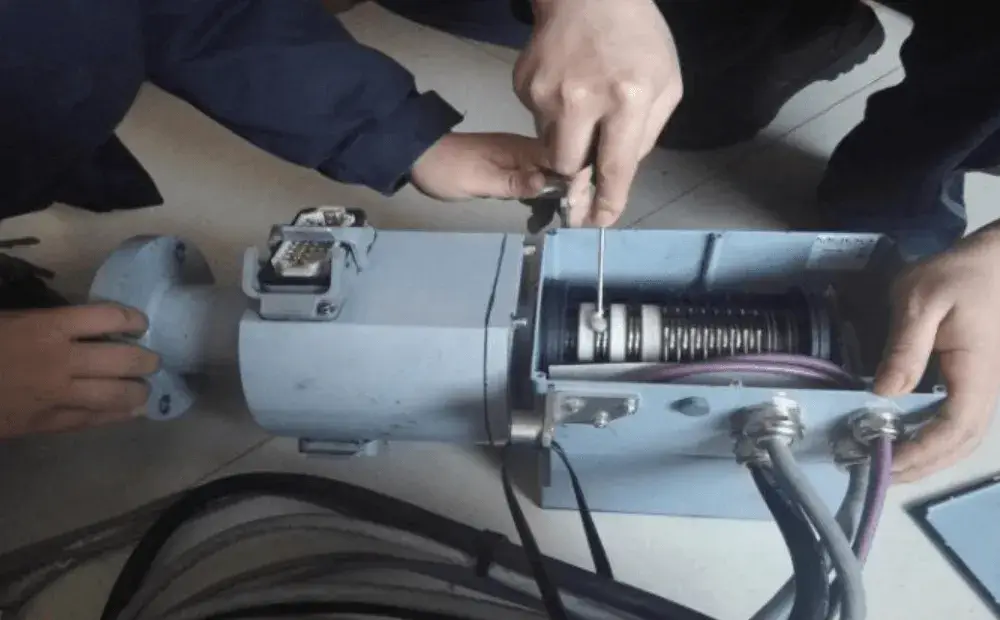
Modern electrical slip rings often transmit multiple types of signals through a single rotating interface, including high-frequency AC signals, high-voltage power, high-current circuits, and low-level DC signals.
This combination creates a technical challenge. When different electrical signals operate within a limited space, electromagnetic coupling can occur between circuits. Without effective interference control, signal accuracy may decline, communication reliability may suffer, and sensitive equipment may experience operational problems.
For applications involving industrial automation, robotics, medical equipment, radar systems, and precision instruments, electromagnetic compatibility is a key consideration when selecting a signal transmission slip ring or customized electrical rotary connector.
The main interference sources include:
- Electrostatic coupling interference
- Magnetic field coupling interference
- Electromagnetic field interference
- Signal transition interference
- Voltage fluctuation interference
Electrostatic Coupling Interference in Electrical Slip Rings
Electrostatic coupling interference occurs because electrical conductors and slip ring circuits naturally create distributed capacitance.
When high-voltage and low-current signals pass through an electrical slip ring, electric field coupling may introduce unwanted interference between circuits.
This type of interference can affect weak signal transmission, especially in applications requiring high signal accuracy.
To reduce electrostatic coupling, engineers typically apply electric field shielding methods.
A shielding structure can be installed around sensitive circuits, with one side of the shielding layer connected to ground. This approach reduces the influence of external electric fields and improves signal stability.
For high-precision electrical slip ring applications, proper circuit separation and shielding design help maintain reliable signal transmission performance.
Magnetic Field Coupling Interference Protection
Magnetic field coupling occurs when nearby conductors carrying alternating current generate mutual inductance.
Because the internal circuits of an electrical rotary connector are installed within a compact structure, the distance between conductive paths is limited. Alternating current can therefore create induced voltages that interfere with signal transmission.
When a slip ring transmits low-voltage and high-current signals, magnetic coupling can become a major interference source.
Engineers can reduce this impact through magnetic shielding.
The shielding material depends on the frequency characteristics of the interference source:
- Low-frequency magnetic fields typically require ferromagnetic materials with high magnetic permeability.
- High-frequency magnetic interference is better controlled with materials featuring low electrical resistance.
The correct shielding approach helps reduce unwanted coupling and protects sensitive circuits inside the electrical slip ring assembly.
Electromagnetic Shielding for High-Frequency Slip Ring Applications
When an electrical slip ring operates with high-voltage and high-frequency signals, both electric and magnetic interference may occur simultaneously.
In these situations, electromagnetic shielding provides a combined protection method.
Conductive shielding materials can block both electric-field and magnetic-field interference, improving electromagnetic compatibility (EMC) performance.
However, shielding structures also increase design complexity. Improper shielding installation may affect the normal operation of equipment or increase manufacturing difficulty.
Therefore, engineers should apply shielding only where necessary and optimize the shielding position based on the actual interference source.
For RF slip rings, high-frequency rotary joints and data transmission slip rings, electromagnetic design becomes especially important because signal quality directly affects system performance.
Signal Transition Interference During Rotation
During signal transmission, sudden changes caused by switching operations can create transient interference.
These rapid signal changes may introduce instability into the electrical connection system, affecting data accuracy or communication reliability.
A common solution is installing filtering components near the interference source.
Filtering circuits help suppress transient signals and reduce the impact of switching noise on the electrical slip ring system.
For applications involving sensitive control signals, industrial communication, or precision measurement, filter design should be considered during the early stage of slip ring development.
Voltage Fluctuation and Surge Protection
When an electrical slip ring transmits high-current or high-voltage power, voltage fluctuations may occur during operation.
These variations can create surge signals, which may interfere with connected electronic equipment.
Voltage instability can lead to:
- Signal distortion
- Communication errors
- Equipment malfunction
- Reduced system reliability
To control this type of interference, engineers can integrate surge suppression devices into the system.
Surge protection reduces the influence of voltage spikes and helps maintain stable electrical transmission.
For industrial power slip rings and hybrid power-and-signal rotary connectors, controlling voltage variation is essential for long-term operational reliability.
Designing Electrical Slip Rings for Reliable Signal Integrity
A reliable electrical slip ring requires more than conductive materials and mechanical rotation capability.
Engineers must consider:
- Circuit isolation
- Shielding structure
- Signal frequency
- Current capacity
- Voltage level
- Environmental conditions
- System sensitivity to interference
For customized electrical slip rings, the electrical design should match the equipment application.
A rotary electrical connector used for industrial automation may prioritize compact design and communication stability, while an RF slip ring or high-frequency rotary joint may require advanced shielding and signal integrity control.
By combining proper material selection, circuit layout, and interference protection methods, manufacturers can deliver slip ring solutions that maintain stable performance in complex operating environments.
Conclusion: Reliability Starts with Electrical Slip Ring Design
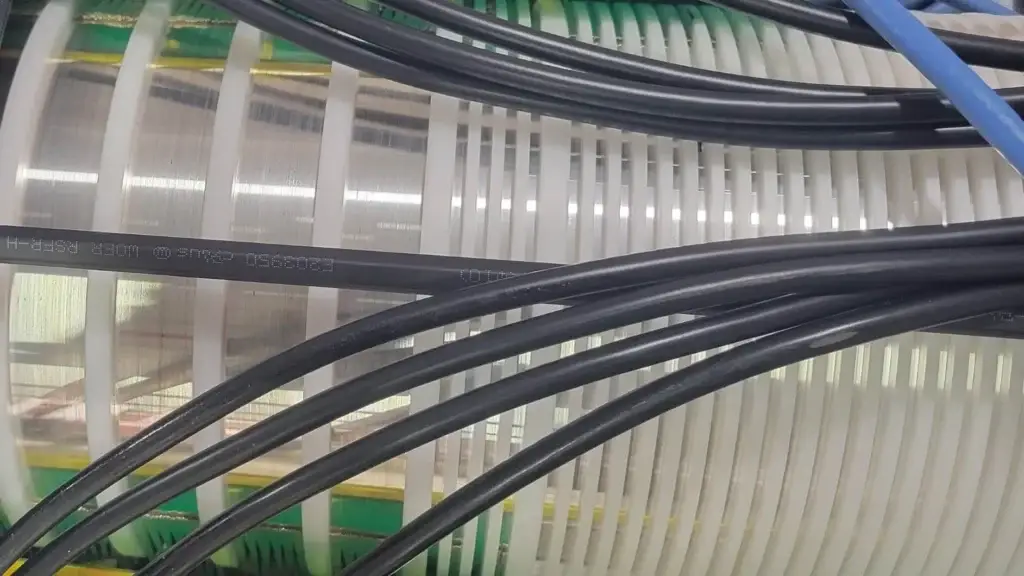
An electrical slip ring is a precision rotary electrical connection system that must maintain stable performance under continuous mechanical movement and complex electrical conditions.
Dynamic resistance, insulation performance, electromagnetic interference protection are the key factors that determine the reliability of a conductive slip ring.
For equipment manufacturers and engineering teams, selecting the right slip ring solution requires evaluating the complete operating environment, including:
- Electrical requirements
- Signal transmission accuracy
- Rotational conditions
- Environmental exposure
- Temperature range
- Service life expectations
A high-quality electrical rotary connector is not only defined by its ability to transmit current and signals. Its real value lies in maintaining stable performance throughout long-term operation.
Manufacturers with strong material knowledge, precision machining capabilities, and experience in customized slip ring development can help Automation equipment customers solve complex rotary transmission challenges.
From compact miniature slip rings to high-current power slip rings, RF slip rings, waterproof slip ring, Ethernet slip rings, and integrated rotary electrical connectors, reliable design and manufacturing expertise remain the foundation of long-term performance.