
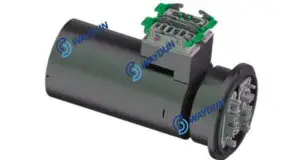
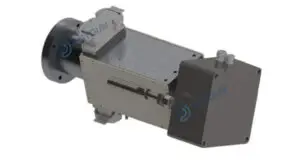
In utility-scale wind energy engineering, the wind turbine slip ring—also categorized as a wind turbine rotary joint, collector ring or rotary electrical interface—is a vital electromechanical component. Although it represents a fraction of the total wind turbine manufacturing cost, it acts as the central nervous system for rotor blade pitch control. Installed within the nacelle or hub, these specialized rotary unions utilize sliding contacts to maintain uninterrupted 360° transmission of electrical power and critical CAN-bus data signals between the stationary nacelle and the rotating hub.
When wind turbine slip ring fail, the turbine cannot actuate its blades, leading to immediate fault trips and lost power generation. Below is a professional failure analysis and troubleshooting breakdown based on field maintenance data from wind farm operation and maintenance person.
Table of Contents
Toggle1. Rotor Blade CAN-Bus Communication Faults: Root Cause Analysis
Data packet loss and fieldbus drops are typical symptoms of degradation within the communication channels of a rotary signal union.
Identifying the Symptoms
Target Diagnostic Codes: 3701, 3733, and 3765.
Failure Analysis: These errors usually stem from a locked pitch communication module, loose or poorly crimped wiring connections, or contaminated high-frequency slip ring tracks. If all three blade profiles trigger a CAN failure simultaneously, the problem is almost always poor contact across the central slip ring communication tracks.
Step-by-Step Troubleshooting
Perform a hard reset on the pitch communication module to clear software anomalies.
Inspect the fieldbus network layout—specifically tracing the path from the A63.0 CAN2 interface module through terminals F42.4 (H/L) and F42.6 (GND), across the Sra300 slip ring, and into the OVP-CL400 blade surge protectors.
Tighten or replace any loose connectors. If the tracking channel exhibits permanent signal degradation, recalibrate the mechanical alignment of the slip ring housing or replace the assembly.
2. Internal Power Supply (IPS) & Drive Circuit Failures
The Internal Power Supply (IPS) circuit monitors the safety loop of the rotor hub. Faults here frequently trigger secondary drive errors.
Identifying the Symptoms
Target Diagnostic Codes: 3708, 3709, 3725, 3726, 3740, 3741, 3757, 3758, 3772, 3773, 3789, 3790 (often accompanied by hub drive fault 4202).
Failure Analysis: These faults isolate within three critical lines:
slip ring way safety chain FB work pos,slip ring way safety chain IN, andslip ring way safety chain OUT. The breakdown is typically caused by a damaged pitch proximity switch or intermittent contact along its wiring harness.
Step-by-Step Troubleshooting
If visual inspections confirm physical damage to the proximity sensor, replace it immediately.
If the hardware is intact, map the entire power delivery loop to find the open circuit. Technicians must systematically probe the circuit as it passes through the rotary collector ring, the main hub wiring loom, the overvoltage protection (OVP) cabinet, the individual pitch control cabinets, and the three physical pitch limit switches.
3. Comprehensive Wind Turbine Slip Ring Encoder Diagnostics
The encoder integrated into the wind turbine slip ring assembly provides critical rotor speed feedback to the main PLC. Speed discrepancies can instantly compromise turbine safety controls.
3.1 Signal Loss (Code 4256: Rotor Speed Analogue Signal < 4mA)
Failure Analysis:
This low-current fault points to an open circuit or total component failure.
Troubleshooting Action:
Check the encoder signal lines for poor terminations, and test the inline surge protective devices (SPDs) for ground faults or electrical breakdown. If the wiring is sound, the encoder itself is likely broken and requires a replacement unit.
3.2 Speed Plausibility Deviations (Codes 4266, 4267, 4268)
Failure Analysis:
These codes flag a severe speed discrepancy between the slip ring encoder and the main generator encoder.
Troubleshooting Action:
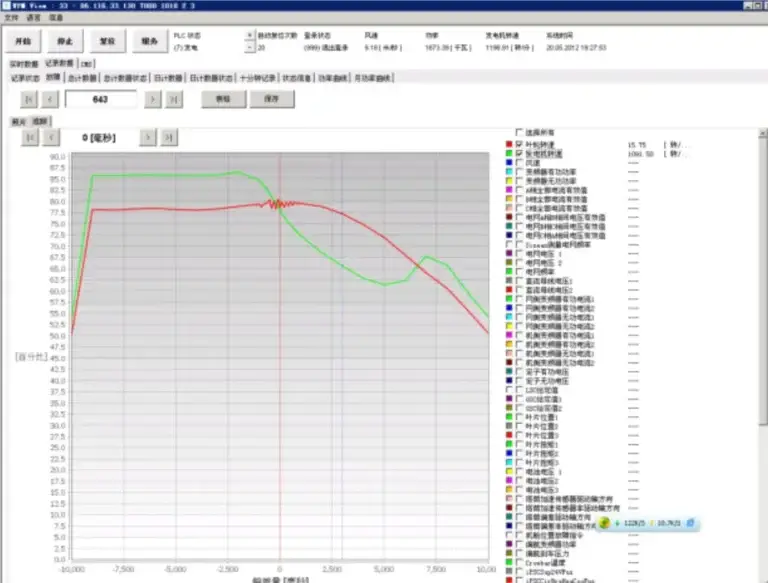
Use the turbine control software to isolate which sensor is fluctuating or reading zero. While the slip ring encoder is the most frequent point of failure, also verify the main generator encoder and the frequency inverter control boards. Additionally, check the mechanical coupling for slippage under full-load torque, and inspect the main gearbox for broken gear teeth or failing bearings that disrupt mechanical rotation.
3.3 Residual Signaling (Codes 4276, 4277, 4278, 4279)
Failure Analysis:
These faults report that the system is still detecting a speed signal while the turbine is under active braking or completely parked. This indicates data corruption or signal distortion.
Troubleshooting Action:
Inspect the signal cable run for short circuits or improper shielding grounds. If the wiring is secure, the encoder’s internal electronics are distorted, and the unit must be replaced.
3.4 Summary of Wind Turbine Slip Ring Encoder Failure Modes
Based on long-term field data and failure analysis, encoder measurement inaccuracies and signal degradation generally boil down to three root causes:
Electrical & Hardware Degradation
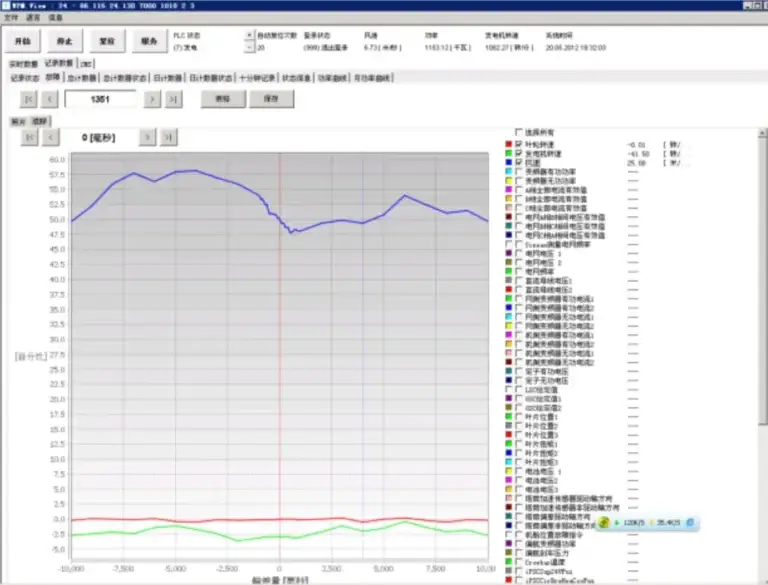
Internal Component Failure: When the encoder suffers fatal internal damage, the CMS (Condition Monitoring System) software will show a complete loss of the speed measurement curve (flatline).
Intermittent Contact/Wiring Issues: Poor wire terminations or broken shielding cause the speed curve to appear intermittently (waveform packet loss).
Mechanical Alignment & Runout Issues
Uneven Base Plate Mounting: If the wind turbine slip ring mounting base is unlevel, it ruins the coaxial alignment of the system.
Structural Looseness: Loose mountings cause severe irregular circular runout. Technicians can visibly see the housing wobble and feel intense vibrations by hand. Solution: Grind the base plate flat and secure the housing using a properly adjusted universal joint.
Drivetrain & Gearbox Mechanical Shocks
Coupling Slippage: High torque during full-load operation can cause the mechanical coupling to slip or overload. Check the torque alignment markers for displacement.
Internal Gearbox Damage: Broken gear teeth or failing bearings inside the main gearbox introduce massive torque ripples and speed fluctuations into the drive string, distorting encoder readings.
4. Mechanical & Environmental Failures of Wind Turbine Slip Ring
Wind Turbine Slip Ring Maintenance FAQ
Q1: Why is my slip ring encoder speed curve missing or intermittent in the CMS software?
A: If the speed curve is completely missing from your monitoring software, the encoder has likely suffered catastrophic internal damage. If the speed curve appears intermittently or drops packets randomly, it indicates loose wire terminations or broken shielding along the signal line.
Q2: What causes a slip ring to visibly wobble or experience irregular runout during operation?
A: This is usually a mechanical installation issue. It happens if the mounting base is uneven or if the slip ring is not properly secured. You can fix this by grinding the base plate to ensure coaxial precision or adjusting the universal joint to dampen operational vibrations.
Q3: How do oil accumulation and dust ingress cause short circuits inside the slip ring housing?
A: When fine metal wear dust mixes with leaked hydraulic oil or excess lubricant, it forms a paste. This paste bridges the insulation barriers between adjacent electrical tracks, leading to cross-talk, short circuits, and severe electrical arcing.
Summary
Preventing pitch slip ring failures requires a combination of precise mechanical alignment, clean working environments, and systematic electrical diagnostics. Addressing issues like base unevenness and oil contamination early protects your wind turbine from costly communication faults and unexpected downtime.
Need reliable, high-performance wind turbine slip rings? Our engineering team specializes in robust rotary unions designed to withstand harsh environments. Contact us today for technical consultations, custom material configurations, or a competitive product quote.