
Slip ring design guide from electrical ratings and contact materials to mechanical constraints, environmental protection, and application-specific trade-offs — everything engineers and procurement teams need to specify, evaluate, and select a slip ring assembly.
Table of Contents
Toggle1. The Complete Slip Ring Design Parameter Checklist
Selecting the right slip ring — also referred to as a rotary electrical connector, rotary joint, collector ring, or electrical swivel — is not a catalog exercise. An undersized ring runs hot and fails early. An over-specified one inflates cost and footprint. The only reliable path to a correct selection is a structured parameter definition process that converts application requirements into a measurable specification, sometimes called an RFQ (Request for Quotation) or engineering datasheet.
Engineers, procurement managers, and OEM designers should work through six definition layers before contacting a supplier or comparing datasheets:
- Application context: What machine or system does the slip ring serve? What motion profile — continuous rotation, indexing, oscillation?
- Rotation axis and structure: Is the rotor inside a hollow shaft (through-bore type), or does it rotate on a solid shaft? Is co-axial or off-axis mounting needed?
- Power and signal requirements: How many electrical circuits are needed? What are the current, voltage, and signal protocol requirements for each channel?
- Operating environment: What temperatures, humidity levels, contaminants, and ingress risks will the assembly face?
- Service life target: What is the expected duty cycle, rotation speed, and total operating hours or revolutions? Many customers express this as a target number of years — 5, 10, or 15 — which must then be translated into a revolution count to select the appropriate contact technology.
- Installation constraints: What are the maximum outer diameter, axial length, through-bore dimension, and cable exit restrictions?
Once these six layers are defined, they map directly to the parameter categories in the checklist below.
Parameter Category | Value to Define | Why It Matters | Risk of Wrong Selection |
Electrical — Power | Voltage, current, power (W/kW) | Determines contact size, material, and insulation class | Overheating, insulation failure, arc damage to ring structure |
Electrical — Circuits | Number of rings/channels, signal types | Defines physical ring count, isolation requirements, and assembly size | Crosstalk, insufficient channels, costly redesign |
Electrical — Signal | Protocol (Ethernet, CAN, RS-485, etc.) | Signal bandwidth and noise tolerance vary widely by protocol | Data corruption, interference, miscoding, signal distortion |
Mechanical — Speed | Max RPM, continuous vs. peak | Surface velocity drives brush wear rate, heat, and contact stability | Accelerated wear, noise, short service life |
Mechanical — Size | Through-bore ID, OD, axial length | Must fit within machine envelope; bore ID vs. channel count trade-off | Cannot install; or too few channels for space available |
Mechanical — Mounting | Flange, stator arm, cable exit direction | Determines integration complexity and cable routing | Mechanical interference, cable stress, damage |
Environmental | IP/NEMA rating, temperature, humidity | Determines sealing strategy, materials, and lubricant choice | Water ingress, corrosion, accelerated oxidation, early failure |
Lifespan | Target years, operating hours, or revolutions | Customers often specify 5, 10, or 15 years — this must translate into a revolution count at the expected RPM and duty cycle | Premature replacement, unplanned downtime |
Certifications | CE, UL, ATEX, MIL-SPEC, etc. | Mandated by end-market regulations or customer specification | Product rejected; certification retrofit is expensive |
Design Margin: Always add a 20–30% safety margin on current ratings and a minimum 2× multiplier on voltage ratings relative to your nominal working values. Thermal derating at elevated ambient temperatures can reduce the safe continuous current by an additional 15–25%. On the current side, erring toward a higher rating is especially important: instantaneous overcurrent — even brief inrush spikes — can puncture the insulation or deform contact surfaces in ways that permanently degrade the ring’s structure and shorten its useful life.
A common failure mode in slip ring procurement is treating only one or two parameters as critical — typically ring count and rated current — while leaving environmental ratings, signal protocols, and lifecycle targets undefined. This leads to field failures, retrofit costs, and unplanned downtime that far exceed the cost of a properly specified part from the outset.
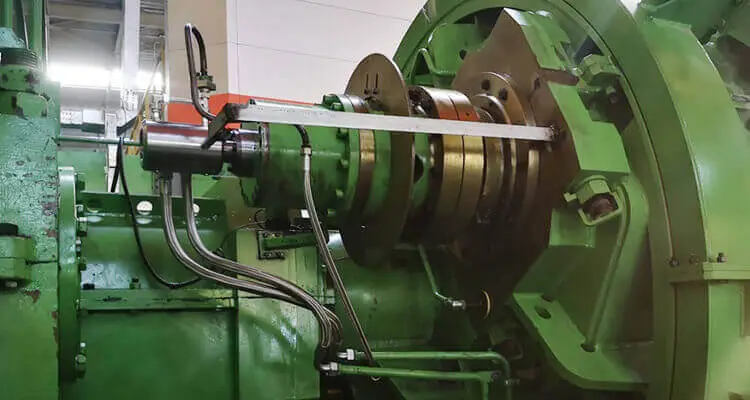
2. Electrical Design Parameters: Current, Voltage, Circuits, Power and Signal Integrity
Electrical parameters are the backbone of any slip ring specification. They define what the assembly must transmit, at what energy level, and with what degree of fidelity. Misspecifying any one of them can cause failure modes ranging from data corruption and intermittent dropouts to insulation breakdown, arcing, and damage to the ring’s internal structure.
2.1 The Three Resistance Parameters — and Why All Three Must Be Specified
Experienced slip ring engineers think in terms of three distinct resistance parameters. The relationship between them is simple but critical: insulation resistance should be as high as possible, while dynamic contact resistance and static contact resistance should both be as low as possible. When all three are optimized simultaneously, signal transmission is stable, noise is minimized, and failure modes like interference, miscoding, and signal distortion are effectively prevented.
Resistance Parameter | Target Direction | What It Governs | Key Specification Rule | Common Mistake |
Insulation Resistance | Higher = better (> 1,000 MΩ at 500 VDC) | Prevents leakage current between circuits; degraded by moisture and contamination | Test after thermal cycling, not only at room temperature | IR drops with humidity — seal the housing or use conformal coating |
Dynamic Contact Resistance | Lower = better (< 5 mΩ for signal rings) | Changes during rotation; governs signal fidelity, noise, and error rate | Specify ΔR (variation), not just the average R value | Ignoring ΔR; a low static R can spike under rotation, corrupting signal |
Static Contact Resistance | Lower = better (< 10 mΩ power; < 5 mΩ signal) | Governs I²R losses and heat generation at rest | Measure at rated current, not with low-current ohmmeters only | Measuring static R alone; dynamic behavior in rotation is the real performance indicator |
Of the three, dynamic contact resistance variation (ΔR) is the hardest to measure and the most frequently overlooked. A supplier may quote an excellent static contact resistance of 5 mΩ, but if the assembly exhibits ΔR of 50 mΩ under rotation — a 10× variation — analog signals will carry visible noise, encoder pulses will exhibit jitter, and Ethernet error rates will climb. Always request a dynamic test report, not a static datasheet value, when evaluating assemblies for signal-critical applications.
2.2 Power Transmission Parameters: Voltage, Current and Surge
Rated current (amperage per ring) is the most frequently misapplied parameter. Catalog ratings are typically stated at a fixed ambient temperature — commonly 20°C or 25°C — under continuous duty. In practice, operating temperature rises as the ambient increases and as duty cycle increases. A ring rated for 20 A continuous at 25°C ambient may safely carry only 14–16 A at 60°C ambient. Designers should apply a 20–30% derating factor as standard practice, and consult the manufacturer’s derating curves for high-temperature applications.
The most important practical rule on current: always specify the rated working current slightly higher than the calculated load. This is not just a conservative margin — it is a structural protection measure. Instantaneous overcurrent events, such as motor inrush or capacitor charge cycles, can generate current spikes 4–5× the continuous rating for 50–200 ms. If the ring is not sized to absorb these transients without insulation breakdown or contact deformation, the structural integrity of the assembly is permanently compromised, and service life is shortened regardless of normal operating conditions.
Rated voltage determines the insulation class and ring-to-ring spacing. Most catalog assemblies specify both working voltage (the continuous operating level) and dielectric withstand voltage (the test level, typically 1.5× to 2× working voltage per IEC 60664-1). For mixed-circuit assemblies carrying both 48 VDC power and 5 V signal, the insulation between circuit groups must withstand the higher voltage — do not assume that sharing a housing automatically achieves electrical isolation.
PWM (Pulse Width Modulation) waveforms from variable frequency drives (VFDs) add a further complication: the peak voltage of a 480 V VFD output can reach 650–800 V due to voltage reflection at cable ends, stressing ring insulation well beyond the nominal 480 V nameplate rating.
On the topic of VFDs and slip rings — a frequently asked question — the answer depends on which application type is meant:
- For wound-rotor induction motors (also called slip ring motors): a VFD can drive the stator while the rotor slip rings connect to external resistance or regenerative converters. The rotor insulation must be rated for VFD-induced transients, and bearing current mitigation (common mode choke, insulated bearings) should be applied per the motor manufacturer’s guidance.
- For transmitting VFD output through a rotary slip ring to a downstream rotating load: the ring must be specified for the VFD peak voltage (not RMS), fast dv/dt transients that accelerate insulation aging, and the EMI environment generated by switching. Rings in this service should be rated for at least 1.5× the VFD DC bus voltage and must include a dedicated ground/shield ring.
Parameter | Typical Range / Value | Critical Consideration | Common Mistake |
Rated Current | 0.5 A – 200 A per ring | Always derate by 20–30%; surge current can reach 4–5× continuous for 100 ms | Selecting at 100% rated capacity — thermal derating not applied |
Rated Voltage | 5 V – 2,000 V | Insulation class must exceed peak voltage, not RMS; applies especially to VFD/PWM | Rating for RMS only; peak voltages cause insulation breakdown |
Surge / Inrush Current | Up to 4–5× rated for < 100 ms | Must confirm with manufacturer; specify to prevent arc damage to ring structure | Assuming catalog continuous rating covers all startup transients |
Contact Resistance ΔR | < 1 mΩ for analog/encoder, < 5 mΩ for digital | Dynamic variation under rotation — governs interference, miscoding, distortion | Using static resistance measurement as the pass/fail criterion |
Insulation Resistance | > 1,000 MΩ at 500 VDC | Must remain high across full temperature and humidity range | Testing once; IR degrades significantly with moisture and aging |
Dielectric Withstand | 500 V – 5,000 V AC (typically 2× working) | IEC 60664-1 requirement; must test at rated temperature | Using working voltage as the test voltage |
Signal Bandwidth | Up to 10 Gbps (fiber optic rings) | Capsule resonance can attenuate high-frequency signals at elevated RPM | Assuming any slip ring passes 1 Gbps Ethernet without protocol testing |
EMI / Crosstalk | > 40 dB isolation between channels | Ground ring + shielded twisted pair; physical separation of power and signal rings | No ground ring, no shielding — noise corrupts adjacent signal circuits |
2.3 Signal Transmission: Protocol-Specific Requirements
Signal circuits impose a separate and often conflicting set of requirements to power circuits. The contact resistance variation (ΔR) threshold varies by protocol: < 1 mΩ for analog instrumentation and encoder signals; < 5 mΩ for CAN bus and RS-485; up to 10 mΩ for robust digital protocols with error correction. Exceeding these thresholds produces interference, data miscoding, and signal distortion — all of which are difficult to diagnose in the field because they manifest intermittently, only under rotation.
Ethernet (10/100/1000BASE-T) requires differential pair routing with controlled impedance (100 Ω ± 15%), a ground ring for shield continuity, and speed limitations: typically < 300 RPM for 100 Mbps, < 100 RPM for 1 Gbps through standard slip rings. At 10 Gbps, fiber optic rotary joints (FORJs) are the only reliable solution. CAN bus (ISO 11898) and RS-485 are inherently more tolerant of contact variation, but stub lengths must be minimized between the ring and bus termination. USB 3.x and RF/microwave signals (requiring coaxial rotary joints, 50 Ω or 75 Ω matched) are specialized cases that should be addressed with purpose-designed hardware rather than adapted from standard slip rings.
Physical ring grouping matters as much as per-ring electrical spec. Best practice: group all power rings together at one end of the assembly and all signal rings at the other, separated by a ground/shield ring or a physical divider partition. Never interleave a high-current power ring between two low-level signal rings — inductive coupling from the power ring will corrupt both adjacent signals regardless of how well each individual ring is specified.
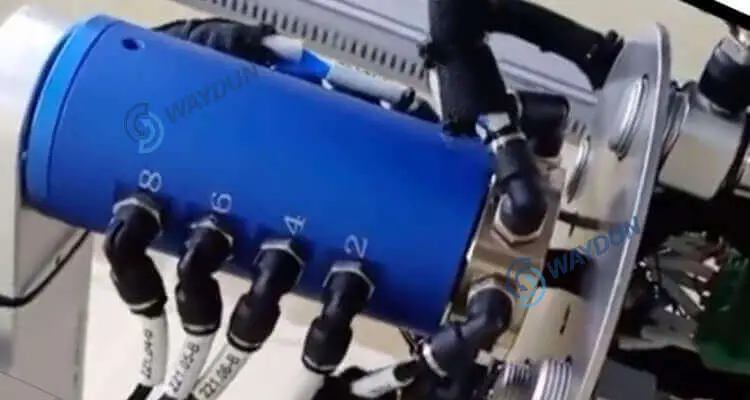
3. Mechanical Design Parameters: Speed, Duty Cycle, Size and Mounting
Mechanical parameters govern how the slip ring integrates into the host machine and how long it will survive in service. They are tightly coupled to electrical performance: high rotational speed increases brush wear rate and electrical noise; large through-bore diameters reduce contact pressure unless compensated in the brush design; shaft misalignment creates oscillating contact forces that dramatically shorten both bearing and brush life.
3.1 Rotational Speed: RPM Is Not Enough
Rotational speed is specified in RPM (revolutions per minute), but RPM alone is an incomplete parameter. The critical derived metric is surface speed (peripheral velocity) at the brush contact, expressed in m/s:
Surface speed (m/s) = π × ring diameter (m) × RPM ÷ 60
A 100 mm diameter ring at 500 RPM has a surface speed of approximately 2.6 m/s — within the acceptable range for precious-metal fiber brushes, which are typically rated to < 5 m/s. The same RPM on a 300 mm ring produces 7.9 m/s, exceeding the safe envelope for most brush-type contacts and requiring non-contact or mercury-wetted solutions.
High-speed slip rings represent a specialized engineering discipline. Purpose-designed high-speed collector ring assemblies, with precision-machined ring surfaces optimized for surface finish and geometric roundness, controlled brush geometry and spring load, and dynamic balancing of the rotor, can achieve operational speeds up to 30,000 RPM — a level that requires every mechanical parameter to be simultaneously optimized. At such speeds, surface speed on even a 10 mm diameter ring exceeds 15 m/s, which demands non-standard contact materials, active cooling, and precision dynamic balance to achieve acceptable life. Maximum attainable life at these extreme speeds can reach 200 million revolutions, but only when the entire design — structure, machining precision and surface finish, assembly accuracy, and brush-to-ring friction geometry — is engineered as an integrated system rather than a collection of independently specified parts.
3.2 Duty Cycle, Start-Stop Frequency and Life Estimation
Rotational speed and duty cycle together determine the total sliding distance accumulated over the ring’s service life, and sliding distance is the primary driver of brush wear. Catalog life ratings express this as total revolutions — more useful than operating hours because a 100 RPM ring accumulates revolutions 10× faster than a 10 RPM ring for the same clock time. Life is approximately inversely proportional to surface speed at the contact: doubling the RPM roughly halves the brush service interval.
Duty Mode | Description | Effect on Wear & Life | Specification Action |
Continuous rotation | Constant load at rated RPM | Keeps contact surfaces polished; suppresses oxide formation | Best for brush life; use catalog life figures directly |
Intermittent / indexing | Start-stop cycles with dwell | Each start creates a contact pressure peak; dwell allows oxide buildup | Request test data at actual cycle rate — do not extrapolate from continuous-duty figures |
High-speed (> 3,000 RPM) | Surface speed > 5 m/s on most ring diameters | Accelerates brush wear; requires precision balance and bearing preload | Specify surface speed, not just RPM; verify heat dissipation and balance specification |
Ultra-high-speed (up to 30,000 RPM) | Specialized high-speed slip ring designs | Requires precision machining surface finish, optimized brush geometry, and dynamic balance | Standard catalog rings are not rated for this speed; use purpose-designed high-speed assemblies |
Long-idle periods | Equipment parked for days or weeks | Oxide and sulfide films form on silver contacts; spikes contact R on restart | Specify gold or platinum contacts, or request idle passivation procedures from manufacturer |
Duty cycle also modifies the oxidation environment at the contact surface. Continuous rotation keeps the contact polished and prevents oxide film formation — generally the best condition for long brush life. Long idle periods, by contrast, allow silver contacts to form oxide and sulfide surface films that spike contact resistance dramatically on the next startup, producing the noise, interference, and miscoding spikes that are often misdiagnosed as electrical faults in the downstream system rather than contact degradation in the slip ring.
3.3 Channel Count, Through-Bore and the Size Trade-off
The number of electrical channels (rings, circuits, poles) required is one of the most important mechanical constraints — not because counting rings is difficult, but because channel count directly drives physical size, and size constraints are often tight. Every additional ring adds axial length, and in through-bore designs, a larger bore inner diameter forces a larger outer diameter to maintain insulation clearances and structural wall thickness.
For standard industrial through-bore assemblies, bore inner diameters range from 12 mm for compact multi-channel rotary joints to 600+ mm for large-platform turntable systems. The practical challenge arises when engineers want both many channels and a small housing — the two goals work against each other. This is the design space where miniature multi-channel slip rings provide the most differentiated value: precision manufacturing enables assemblies with diameters as small as 6–22 mm to carry 2 to 36 circuits simultaneously, with very low friction torque (often < 10 N·mm for sizes under 15 mm OD). These miniature designs are used in UAVs, camera gimbals, medical devices, and collaborative robot wrists precisely because they achieve high circuit density in minimal installation space, allowing the host equipment to operate more smoothly without interference from a bulky rotary joint.
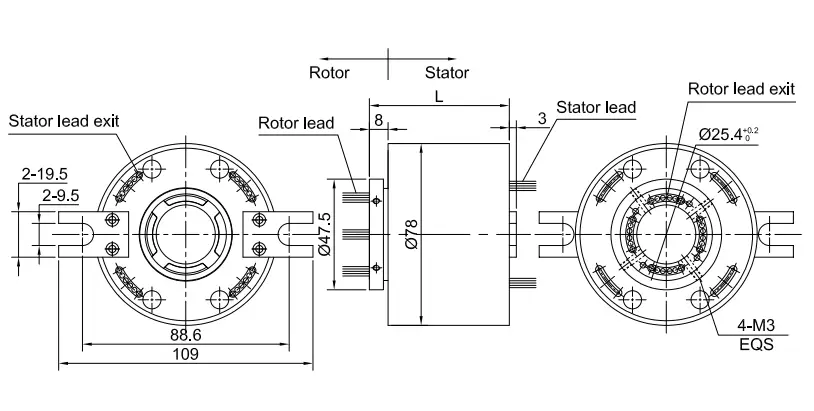
Key dimensional parameters to specify: through-bore inner diameter (ID), maximum outer diameter (OD), maximum axial length, and cable exit direction (radial, axial, or tangential — each has implications for cable bend radius and routing constraints inside the machine).
3.4 Bearings, Shaft Alignment and Friction Torque
The bearing system must handle radial and axial loads from cable tension, rotor mass, and machine-induced forces. Deep-groove ball bearings (DGBB) suit most light-to-medium applications; angular contact bearings handle combined axial-radial loads; needle rollers address high radial loads in compact axial envelopes. Bearing preload affects both electrical noise and life — too little preload allows ring runout; too much increases friction torque and heat generation.
Shaft runout (radial and axial eccentricity) must be specified and controlled. Excessive runout — common on worn shafts or imprecisely machined adapters — causes cyclical variation in brush contact force at the rotation frequency, which manifests as electrical noise with a characteristic frequency equal to RPM ÷ 60 Hz. This is a useful diagnostic marker: if noise frequency tracks the shaft speed, the root cause is mechanical rather than electrical.
Friction torque (also called starting torque or drag torque) must be included in the drivetrain torque budget. In miniature assemblies used in precision gimbals and robotic joints, brush friction can represent 5–20% of available servo torque if not factored into the mechanical design. Specify maximum allowable friction torque at operating temperature and request a factory measurement report for precision applications.
Specify It Right: Engineering Review and RFQ Support
A correctly specified slip ring costs little more than a standard catalog part — and saves orders of magnitude more in downtime, retrofit costs, and reliability failures over its service life. The most expensive slip ring failure is almost always the result of missing one parameter from the specification, not from choosing the wrong product from a complete specification.
Before submitting a request for quotation (RFQ) or selecting from WayDun Technology catalog, assemble the following information:
- Each circuit’s voltage, current (continuous and peak/surge), and signal protocol
- Maximum RPM and duty cycle (continuous, intermittent, or indexing with cycle rate)
- Through-bore inner diameter, maximum outer diameter, and maximum axial length
- Operating temperature range and environmental exposure (IP rating target, humidity, chemicals, altitude)
- Target service life in years — and the RPM and duty cycle needed to translate that into a revolution count
- Applicable certifications and standards (CE, UL, ATEX, MIL-SPEC, or application-specific)
Applications involving custom signal protocols, speeds above 500 RPM, extreme environments, channel counts above 24, or service life targets above 100 million revolutions warrant a formal engineering review rather than catalog selection. A correctly completed parameter sheet is the most efficient path to an accurate quotation and a reliable outcome.
Frequently Asked Questions
What are the most important slip ring design parameters?
In priority order: (1) current per circuit with derating, and the awareness that undersized current rating risks structural damage from transient overcurrent; (2) voltage with appropriate insulation class; (3) the three resistance parameters — insulation resistance high, dynamic and static contact resistance low; (4) maximum RPM and duty cycle; (5) number of channels and through-bore size; (6) environmental sealing (IP rating); (7) target lifespan in revolutions; and (8) certifications. All eight must be defined — missing any one risks field failure.
What slip ring parameters matter most for signal transmission?
Dynamic contact resistance variation (ΔR) is the primary determinant of signal fidelity — it directly causes interference, miscoding, and distortion when it exceeds the protocol’s tolerance. Protocol-specific requirements follow: differential impedance for Ethernet and CAN, bandwidth and insertion loss for high-speed digital, VSWR for RF coaxial joints. Physical separation of power and signal circuits, and a dedicated ground/shield ring, are design parameters that must be specified explicitly and verified on a dynamic test report.
Please check here, if you want to know about electrical swivel selection and manufacturing.