
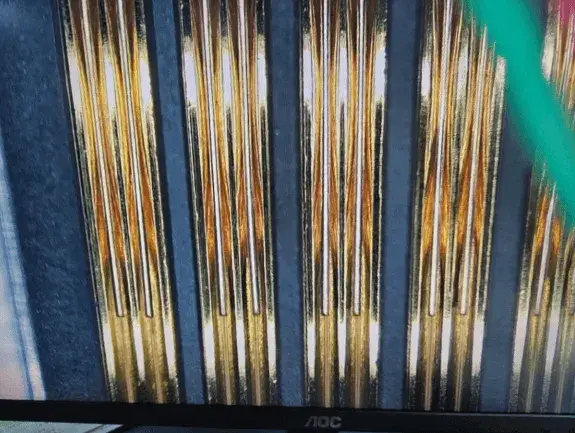
Rotary Electrical Contact Introduction
The long-term reliability of any electrical slip ring connector (also known as a rotary electrical connector, rotary electrical interface or slip ring assembly) depends on far more than its structural design. Every rotary connector, whether it is a capsule slip ring, pancake slip ring, through-bore slip ring or custom rotary joint, relies on a continuously operating electrical sliding contact: the interface where stationary slip ring brushes maintain electrical continuity with rotating conductive rings. This slip ring electrical contact is responsible for transmitting power, control signals, or high-speed data while enduring continuous mechanical friction, electrical current loading, temperature fluctuations, vibration, and environmental contamination.
The reliability evaluation of electrical and environmental performance in rotary electrical connectors is closely related to internationally recognized testing practices, including environmental testing methods described in IEC 60068.
Because the slip ring electrical contact bears both electrical and mechanical loading simultaneously, its performance directly determines the rotary connector’s contact resistance, electrical noise, wear rate, service life, and overall operational stability. This is precisely why slip ring brush materials and slip ring electrical contact design are treated as core engineering disciplines rather than an afterthought in rotary connector manufacturing.
Here is an article for help engineers to know slip ring well.
Selecting the right electrical contact materials for slip ring brushes — whether copper slip ring brushes, silver graphite brushes, gold alloy contacts, or precious-metal fiber brushes — is one of the most critical aspects of rotating power and signal transmission. Even the most advanced mechanical design, precision bearing, or housing geometry cannot compensate for poorly matched slip ring brush and ring contact materials.
Table of Contents
ToggleWhat Is Current Carrying Friction and Wear?
Unlike conventional mechanical friction, the electrical contact pair inside a slip ring assembly carries electric current while two conductive surfaces slide continuously against one another. This phenomenon is commonly known as current-carrying friction and wear or electrical sliding wear.
During operation, the slip ring brushes contact is subjected to several coupled physical effects simultaneously, including:
- Mechanical friction and wear
- Electrical current transmission
- Contact resistance variation
- Arc generation during intermittent or momentary contact loss
- Joule heating (resistive heating)
- Electromagnetic effects
- Surface oxidation and chemical reactions
These interacting mechanisms make electrical sliding contacts significantly more complex than ordinary tribological (friction and wear) systems. In engineering practice, electrical contact materials are commonly evaluated through combined mechanical and electrical durability testing, including wear resistance, contact resistance stability, and electrical endurance testing methods used in electrical contact research. Material degradation in a slip ring electrical contact is no longer determined solely by mechanical friction, but by the combined influence of electrical, thermal, and chemical processes acting on the brush and ring simultaneously.
In demanding applications such as radar systems, aerospace and satellite platforms, offshore and subsea equipment, industrial automation, robotics, wind turbine pitch and yaw systems, CT and MRI medical imaging gantries, and high-speed test rigs, the electrical contact system must maintain stable conductivity despite continuous exposure to vibration, mechanical shock, high rotational speed, and changing environmental conditions.
Consequently, the choice of slip ring brush material and electrical contact design becomes one of the primary factors governing overall slip ring reliability, brush life, and maintenance interval.
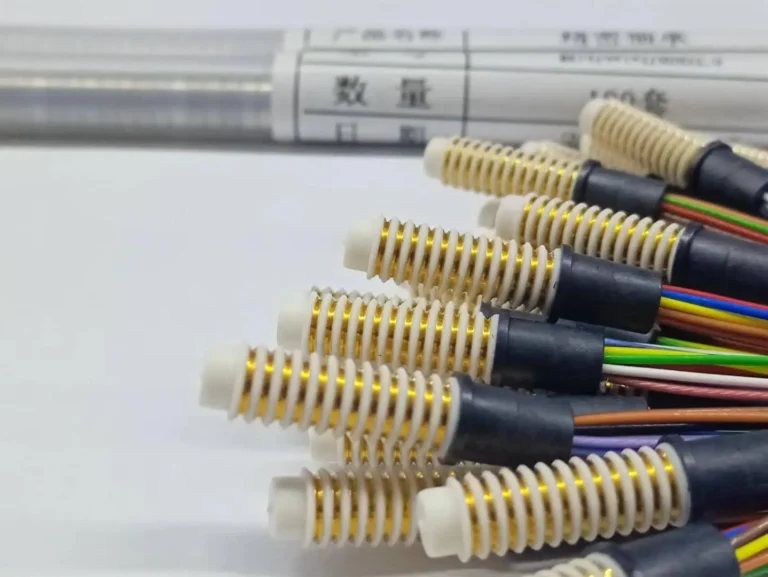
Performance Requirements for Slip Ring Brushes Electrical Contact Materials
An ideal slip ring brushes electrical contact material should achieve an optimal balance between electrical conductivity, mechanical durability, thermal stability, and chemical resistance.
The following characteristics are generally considered essential for any high-performance slip ring electrical contact material, regardless of whether it is used in a fiber brush, wire brush, monofilament brush, or precious-metal block brush configuration.
1. Excellent Electrical Conductivity
Electrical conductivity and resistivity measurements of copper, silver and other conductive materials are typically characterized according to internationally recognized material testing methods, such as ASTM B193 for electrical resistivity of conductive materials.
A high-performance slip ring contact material should exhibit:
- Low electrical resistivity
- Stable, repeatable contact resistance throughout its service life
- High thermal conductivity for efficient heat dissipation at the brush-ring interface
- Low electrical noise during continuous rotation
Stable conductivity minimizes power loss while reducing signal distortion, making it particularly important in high-speed communication slip rings, Ethernet slip rings, encoder feedback systems, and precision instrumentation slip ring assemblies.
2. Superior Mechanical Properties
Because the slip ring brush continuously slides against the rotating ring, both the brush material and the ring material experience constant mechanical wear.
An ideal electrical contact material should provide:
- High wear resistance
- Adequate hardness
- Good toughness
- Sufficient mechanical strength at both room and elevated temperatures
- Appropriate elastic modulus to maintain stable contact pressure and consistent brush force
These properties help reduce surface damage and extend the maintenance interval and replacement cycle of slip ring brushes.
3. Outstanding Arc Resistance
Momentary interruptions in electrical contact may generate electrical arcs, particularly in applications involving high current, high-speed rotation, or unstable operating conditions.
Repeated arc discharge across a slip ring electrical contact can cause:
- Surface melting
- Material evaporation
- Contact pitting
- Increased contact resistance
- Accelerated brush and ring wear
Therefore, premium slip ring brush materials and electrical contact alloys should possess:
- High melting temperature
- Excellent arc erosion resistance
- Low welding tendency
- Minimal material transfer between the brush and ring
These characteristics significantly improve operational reliability of slip ring assemblies under demanding electrical loads, including motor commutation, power slip rings, and high-current rotary joints.
4. Excellent Chemical Stability
Slip ring electrical contacts are continuously exposed to oxygen, moisture, sulfur-containing gases, industrial pollutants, salt spray and other environmental contaminants. Especially in marine, offshore and outdoor rotary connector applications. For outdoor and harsh-environment rotary electrical connectors, corrosion resistance and environmental durability are often verified through accelerated testing methods such as salt spray testing described in ASTM B117.
A suitable slip ring contact material should resist:
- Oxidation
- Sulfidation
- Corrosion
- Carbonization
- Formation of poorly conductive surface films
Stable chemical properties help maintain low, consistent contact resistance throughout the entire service life of the slip ring brush and ring assembly.
5. Good Manufacturability
Beyond raw performance, manufacturing considerations also influence slip ring brush material selection.
Practical electrical contact materials should offer:
- Good machinability
- Reliable joining and welding characteristics
- Stable processing quality
- High production consistency
- Competitive manufacturing cost, supporting both custom slip ring electrical contact solutions and high-volume OEM slip ring brush production
These factors become increasingly important for manufacturers producing slip ring brushes and electrical contact assemblies at industrial scale.
Copper Slip Ring Brushes Contact Materials
Copper slip ring brushes — sometimes marketed as copper-graphite brushes or copper alloy brush contacts — are widely used in electrical slip ring assemblies because of copper’s exceptional electrical conductivity, thermal conductivity, and cost-effectiveness. Copper remains one of the most common base materials for high-current slip ring brushes across industrial rotary connectors.
Its primary advantages include:
- Excellent electrical conductivity
- High thermal conductivity
- Relatively low material cost
- Good corrosion resistance under normal operating conditions
- Easy machining and manufacturing
These characteristics make copper an attractive choice for many industrial slip ring applications, particularly where high-current transmission, power slip rings, and economical production are priorities — including cranes, wind turbines, packaging machinery, and heavy rotary equipment.
However, pure copper also exhibits several inherent limitations.
At elevated temperatures, copper gradually loses mechanical strength and becomes susceptible to plastic deformation. In addition, copper surfaces oxidize relatively easily when exposed to air. The resulting oxide layer increases slip ring contact resistance and may reduce long-term electrical stability.
To overcome these disadvantages, modern copper slip ring brushes are rarely composed of pure copper alone.
Instead, engineers often enhance copper-based slip ring brush materials by introducing reinforcement phases such as:
- Alloying elements (e.g., copper-tin, copper-tellurium, copper-chromium)
- Graphite solid lubricants
- Molybdenum disulfide (MoS₂)
- Carbon fibers
These additions improve:
- Oxidation resistance
- Self-lubricating capability
- Wear resistance
- High-temperature mechanical strength
- Long-term operational stability
As a result, copper-composite slip ring brush materials remain an important solution for medium- and high-current slip rings where electrical conductivity and cost efficiency must be balanced — a common requirement for buyers searching for affordable, high-current slip ring brushes or bulk slip ring brush replacement parts.
Silver-Based Electrical Contact Materials
Among all electrical contact materials used in slip ring brushes, silver possesses the highest electrical conductivity and one of the highest thermal conductivities of any engineering metal. Silver graphite brushes and silver alloy contacts are among the most widely specified slip ring brush materials in general industrial rotary connectors.
For decades, silver-based slip ring contact materials have been widely adopted because they combine excellent electrical performance with relatively straightforward manufacturing.
Their major advantages include:
- Outstanding electrical conductivity
- Excellent thermal conductivity
- Good oxidation resistance
- Low and stable contact resistance
- Excellent machinability
These properties allow silver-based slip ring brushes to deliver highly stable electrical transmission, especially in applications where signal quality and low electrical noise are critical.
Nevertheless, silver is not without limitations.
Pure silver has relatively low hardness and limited wear resistance. Under repeated sliding contact, brush surface wear can become significant. Silver is also susceptible to sulfur-containing environments, where sulfide films may gradually form and influence electrical performance and contact resistance stability.
Under heavy electrical loads, silver-based slip ring contacts may additionally experience:
- Arc erosion
- Material evaporation
- Contact welding
- Material transfer between contact surfaces
To address these issues, modern silver-based electrical contact materials commonly incorporate alloying elements or reinforcement phases (such as silver-nickel, silver-graphite, or silver-tungsten composites) that improve hardness, wear resistance, and arc resistance while maintaining excellent conductivity.
Because of their outstanding electrical performance, silver-based slip ring brush materials are particularly suitable for precision industrial equipment, general-purpose slip ring assemblies, and rotary connectors operating in relatively clean environments where stable signal transmission and low contact resistance are critical.
Slip Ring Brushes Gold Contact
Gold is widely recognized as one of the most reliable precious metals for electrical slip ring contacts. Unlike many engineering metals, gold remains chemically stable under normal atmospheric conditions and is highly resistant to oxidation and corrosion. For gold-plated electrical contacts, coating thickness and performance are commonly evaluated according to plating standards such as ASTM B488, which specifies electrodeposited gold coatings for engineering applications. As a result, gold-based slip ring brush materials maintain exceptionally low and stable contact resistance throughout their service life.
These characteristics make slip ring brushes gold contact materials the preferred choice for applications where signal integrity is more important than raw current-carrying capacity — such as low-current signal slip rings, precision rotary electrical connectors, and miniature or capsule slip ring assemblies.
The principal advantages of gold-based slip ring contact materials include:
- Extremely stable contact resistance
- Excellent corrosion and oxidation resistance
- Outstanding resistance to surface contamination
- High electrical conductivity
- Excellent reliability for low-level signal transmission and low-noise slip ring electrical contact applications
For precision electronics, communication systems, servo control equipment, and instrumentation slip rings, even slight fluctuations in contact resistance can introduce signal distortion or data errors. Gold slip ring brush contacts effectively minimize these risks by providing a clean, stable electrical interface — a key reason gold contacts remain a popular long-tail search term among engineers sourcing precision slip ring brushes for encoders and sensors.
However, pure gold also presents several engineering challenges.
Its relatively low hardness makes it susceptible to mechanical wear during continuous sliding contact. Gold also has a tendency to transfer material between mating surfaces and may experience adhesive wear or contact welding under higher electrical loads.
Consequently, pure gold is rarely used alone as a slip ring brush material in rotary slip ring systems.
Instead, manufacturers typically develop gold-based alloys for slip ring brushes by incorporating elements such as:
- Silver (Ag)
- Copper (Cu)
- Palladium (Pd)
- Platinum (Pt)
These alloying additions significantly improve:
- Mechanical strength
- Surface hardness
- Wear resistance
- Resistance to contact welding
- Arc erosion resistance
Balancing conductivity with mechanical durability, gold-alloy slip ring electrical contacts achieve both excellent signal transmission and extended operational life — making them a common recommendation for buyers comparing precious-metal slip ring brush options.
Slip ring brushes gold contact materials are widely used in:
- High-frequency signal slip rings
- Ethernet slip rings and slip ring data transmission systems
- Fiber optic hybrid slip rings (combined electrical and optical rotary connectors)
- Medical imaging equipment (CT scanners, MRI gantries)
- Precision test instruments
- Aerospace electronic systems
- Military and defense communication platforms
Whenever transmission stability is prioritized over current-carrying capacity, gold slip ring brushes remain one of the industry’s preferred electrical contact material choices.
Platinum-Based Electrical Contact Materials
Among commercially available electrical contact materials for slip ring brushes, platinum offers one of the highest levels of durability under harsh operating environments.
Compared with gold and silver, platinum-based slip ring contact materials exhibit outstanding:
- Wear resistance
- Corrosion resistance
- Chemical stability
- High-temperature performance
- Long-term operational reliability
These characteristics allow platinum-based slip ring electrical contacts to operate for extended periods under demanding environmental conditions with minimal degradation — a key advantage for mission-critical rotary connectors.
For slip rings used in offshore equipment, subsea rotary connectors, defense systems, industrial automation, and severe outdoor environments, platinum provides excellent long-term stability and is often specified in premium or heavy-duty slip ring brush product lines.
The primary disadvantage of platinum is cost.
As one of the world’s most valuable engineering metals, platinum significantly increases the manufacturing cost of slip ring brushes and electrical contact assemblies. Pure platinum may also exhibit the so-called “brown powder” phenomenon, in which repeated electrical operation gradually generates fine oxide particles that can influence slip ring contact performance if not properly controlled.
To address these issues, platinum is commonly alloyed with other metals to improve:
- Hardness
- Arc resistance
- Anti-welding characteristics
- Overall electrical durability
Because of its exceptional environmental resistance, platinum-based electrical contact materials are frequently selected for low-current but mission-critical slip ring applications where maximum reliability outweighs manufacturing cost — a niche but important segment for buyers researching premium slip ring brush and contact ring compatibility.
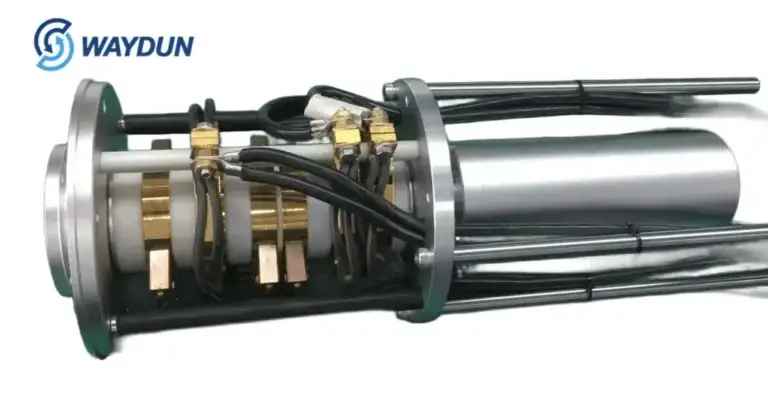
How to Select the Right Slip Ring Electrical Contact Material
There is no universally “best” electrical contact material for every slip ring brush application.
Instead, engineers must evaluate multiple operating parameters simultaneously, including:
- Current capacity
- Signal type (analog, digital, Ethernet, RF, fiber optic)
- Rotational speed
- Environmental conditions (temperature, humidity, salt spray, contamination)
- Expected service life and maintenance interval
- Cost objectives and total cost of ownership
Different applications often require entirely different slip ring brush material strategies.
Application Requirement | Recommended Slip Ring Contact Material |
High-current power transmission | Copper-based composite slip ring brushes |
General industrial equipment | Silver-based alloy slip ring brushes |
Precision signal transmission | Gold-based alloy slip ring brushes |
Harsh operating environments | Platinum-based slip ring brushes |
Mixed power and signal transmission | Optimized multi-material slip ring contact system |
Rather than relying on a single material, modern high-performance slip ring assemblies frequently employ different slip ring brush contact materials within the same unit. Power circuits, communication channels, encoder signals, and RF transmission paths may each utilize slip ring brush materials optimized for their specific electrical and mechanical requirements.
Material | Conductivity | Wear Resistance | Corrosion Resistance | Relative Cost | Typical Applications |
Copper-Based | Excellent | Moderate | Moderate | Low | High-current industrial slip rings |
Silver-Based | Excellent | Good | Good | Medium | General industrial power and signal transmission |
Gold-Based | Excellent | Good (Alloyed) | Excellent | High | Precision signal, Ethernet and instrumentation |
Platinum-Based | Good | Excellent | Excellent | Very High | Harsh environments and mission-critical systems |
Although each material has unique advantages, modern slip ring technology increasingly relies on engineered alloys and composite slip ring brush materials rather than pure metals alone. The objective is always to achieve the optimal balance between conductivity, wear resistance, mechanical strength, thermal stability, and manufacturing cost.
Sourcing High-Quality Slip Ring Brushes and Electrical Contact Materials
When comparing suppliers of slip ring brushes and slip ring electrical contact assemblies, buyers and design engineers commonly evaluate:
- Availability of custom slip ring electrical contact solutions for non-standard current, voltage, or signal requirements
- Compatibility between brush material and ring plating (e.g., gold-on-gold, silver-on-silver, or mixed-material pairings)
- Manufacturer experience with high-current slip ring brushes, precision signal slip ring brushes, and hybrid electrical-optical rotary connectors
- OEM slip ring brush replacement parts and cross-reference support for legacy rotary connector systems
- Testing data on contact resistance stability, electrical noise, and expected brush life under specified load and speed conditions
Professional slip ring manufacturers typically validate contact performance through internal endurance tests, including rotational life testing, temperature rise evaluation, electrical noise measurement, and contact resistance monitoring under specified operating conditions.
Working with an experienced manufacturer like WayDun technology helps ensure that material selection, brush geometry, and ring plating are engineered together as a matched system, rather than treated as independent components.
Frequently Asked Questions
What is the best electrical contact material for slip ring brushes?
There is no universal answer. The optimal slip ring brush material depends on current rating, signal type, operating speed, environmental conditions, and expected service life. Copper, silver, gold, and platinum each excel in different slip ring applications.
Why is silver widely used in electrical slip rings?
Silver combines excellent electrical conductivity, good thermal conductivity, relatively low contact resistance, and reasonable manufacturing cost. These properties make silver-based slip ring brush alloys one of the most versatile solutions for industrial slip ring assemblies.
Why are gold contacts preferred for signal transmission?
Gold provides exceptionally stable contact resistance while resisting oxidation and corrosion. These characteristics help maintain signal integrity in communication systems, sensors, encoders, and precision electronic equipment using slip ring electrical contacts.
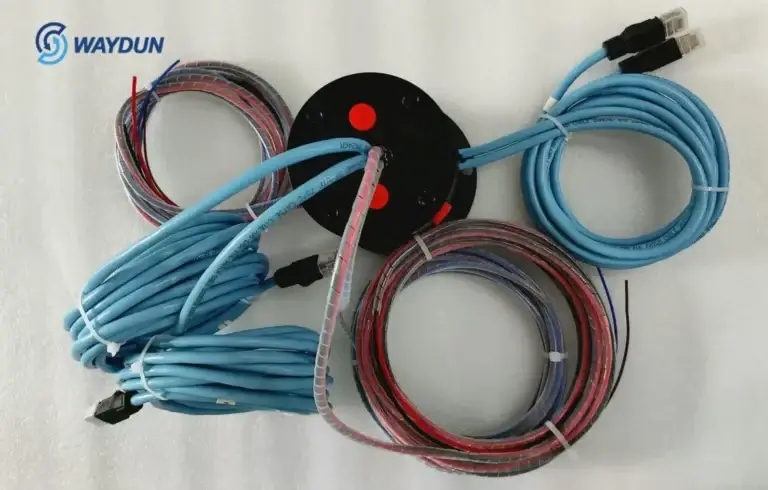
Common Slip Ring Electrical Contact Failure Cases
Analysis of the Causes of Internal Defects
Conclusion
Electrical contact materials are fundamental to the reliability of every slip ring system, rotary electrical connector, and rotary joint. Their performance directly influences conductivity, contact resistance, wear behavior, electrical noise, and operational lifetime.
While copper, silver, gold, and platinum slip ring brush materials each offer unique advantages, no single material satisfies every application requirement. Successful slip ring brush and electrical contact design therefore depends on selecting materials that balance electrical, mechanical, thermal, and chemical performance for the intended operating conditions — whether that means high-current copper composites, general-purpose silver alloys, precision gold contacts, or mission-critical platinum-based slip ring brushes.
As industrial equipment continues to demand higher rotational speeds, greater power density, and increasingly reliable data transmission, advances in slip ring electrical contact materials and tribological engineering will remain central to the future development of high-performance slip ring brushes and rotary electrical connector technology.